How to Transition Your Summer Wardrobe to Fall
A practical guide to summer to fall outfits: which pieces to keep wearing, how to layer for unpredictable days, and when to switch to full autumn looks.
Redaktionell geprüft: Vor der Veröffentlichung prüfen wir Tragbarkeit, Proportionen und Alltagstauglichkeit. Unsere redaktionelle Arbeitsweise und Bildrichtlinie erklären wir unter Über uns; Angaben zur Unabhängigkeit bei Affiliate-Links stehen im Affiliate-Hinweis.
The move from summer to fall rarely happens on a single day. In most of the US, September runs warm at noon and cool by 7 p.m., and it takes until late October or November for the weather to hold steady. That gap is where most people either overheat in a sweater or freeze in a sundress. The fix is not a new closet. It is knowing which summer pieces still work, what to layer over them, and when to finally put the knits into rotation.
This guide splits the shift into three stages: warm-leaning days when a single layer is enough, unpredictable days that need one removable mid-layer, and the cold stretch when full autumn looks make sense. Below are 16 summer to fall outfits organized that way, plus a week-by-week look at the weather, the mistakes to avoid, and a short FAQ.
How the Weather Actually Shifts, Week by Week
Through most of September, daytime highs sit in the 70s while mornings drop to the low 50s. That is a 20-degree swing in one day, so the priority is a layer you can carry once the sun is up, not added warmth all over. By mid-October the pattern moves down: highs in the 60s, mornings in the 40s, and the afternoon no longer climbs back to shirt-sleeve weather. A knit becomes the base, not the accent. By November highs are in the 50s and mornings hit the 30s. Now you are dressing for cold all day and adding a coat on top, not swapping layers in and out. Match the outfit to the stage you are actually in, not the one on the calendar.
Keep Wearing Your Summer Pieces (Just Add One Layer)
Early fall, roughly 60 to 72 degrees, does not require you to retire your dresses and tees. One layer over a summer base handles the morning chill and comes off by lunch. For more on this stage, see our guide to restyling summer dresses for fall.
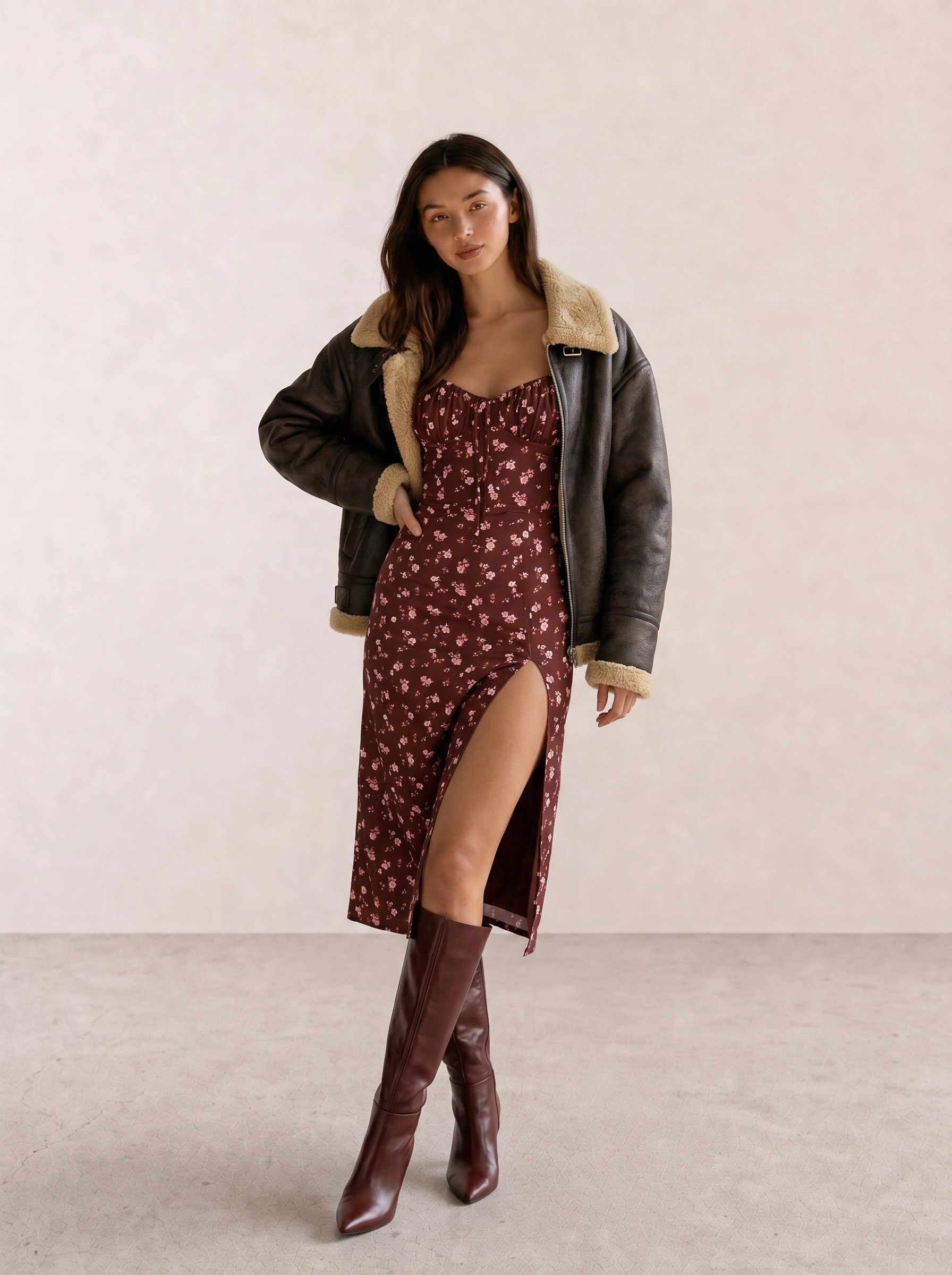
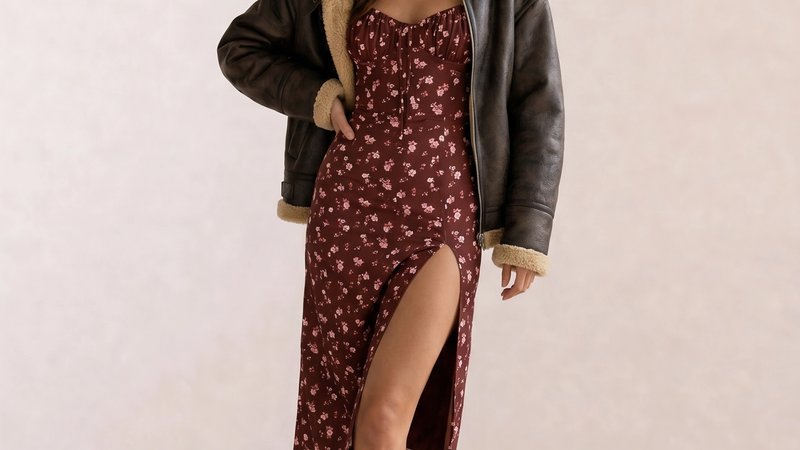
A summer floral dress carries straight into fall under a shearling jacket with brown boots. The short pile of the shearling adds warmth without bulk, so the dress still leads the outfit. Swap the sandals you wore in July for the boots and the hemline suddenly makes sense at 55 degrees. The shearling runs warm, though, so this combination stops working much above 68 degrees.
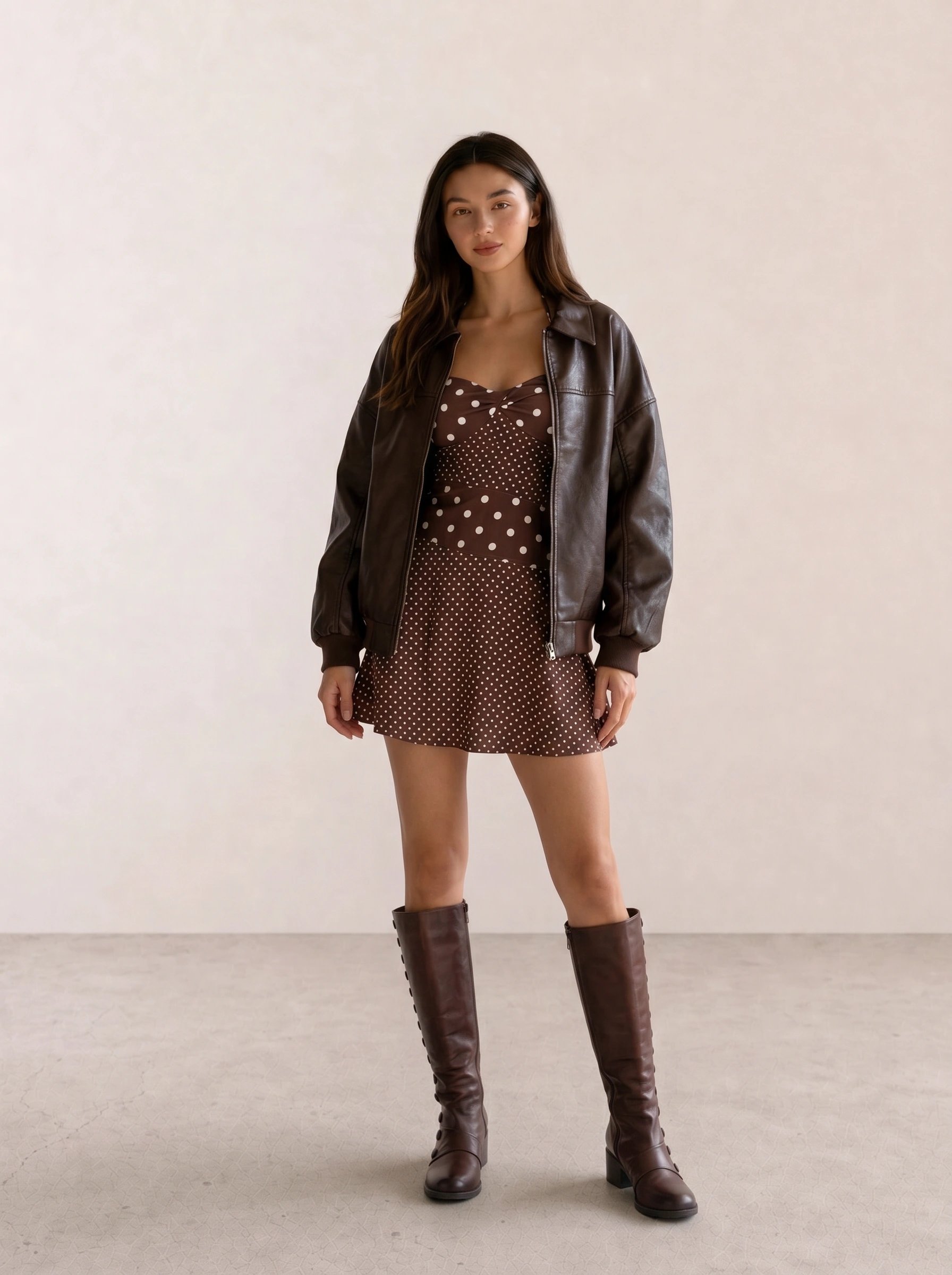
The polka dot mini dress with a brown leather jacket works because leather blocks wind, which is what actually makes September evenings feel cold, not the temperature alone. The jacket ends at the hip and keeps the dress proportions intact. Bare legs are fine until it drops below 60; after that, add opaque tights.
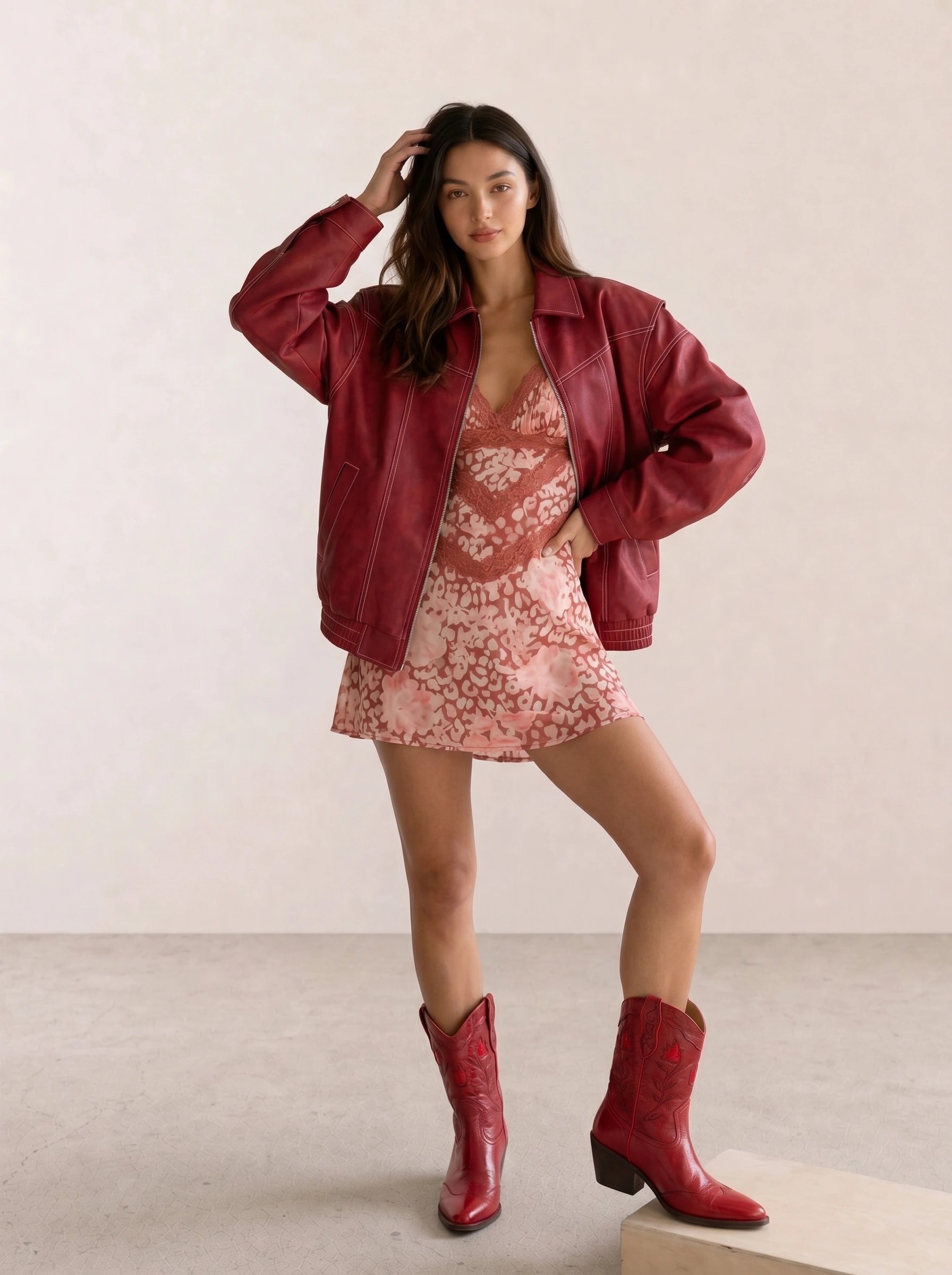
Same idea, shorter and boxier jacket: a red leather bomber over a floral mini dress. The elastic hem traps a bit of warm air at the waist, so it feels warmer than a straight-cut jacket of the same weight. Matching the boots to the bomber keeps a busy floral print from taking over.
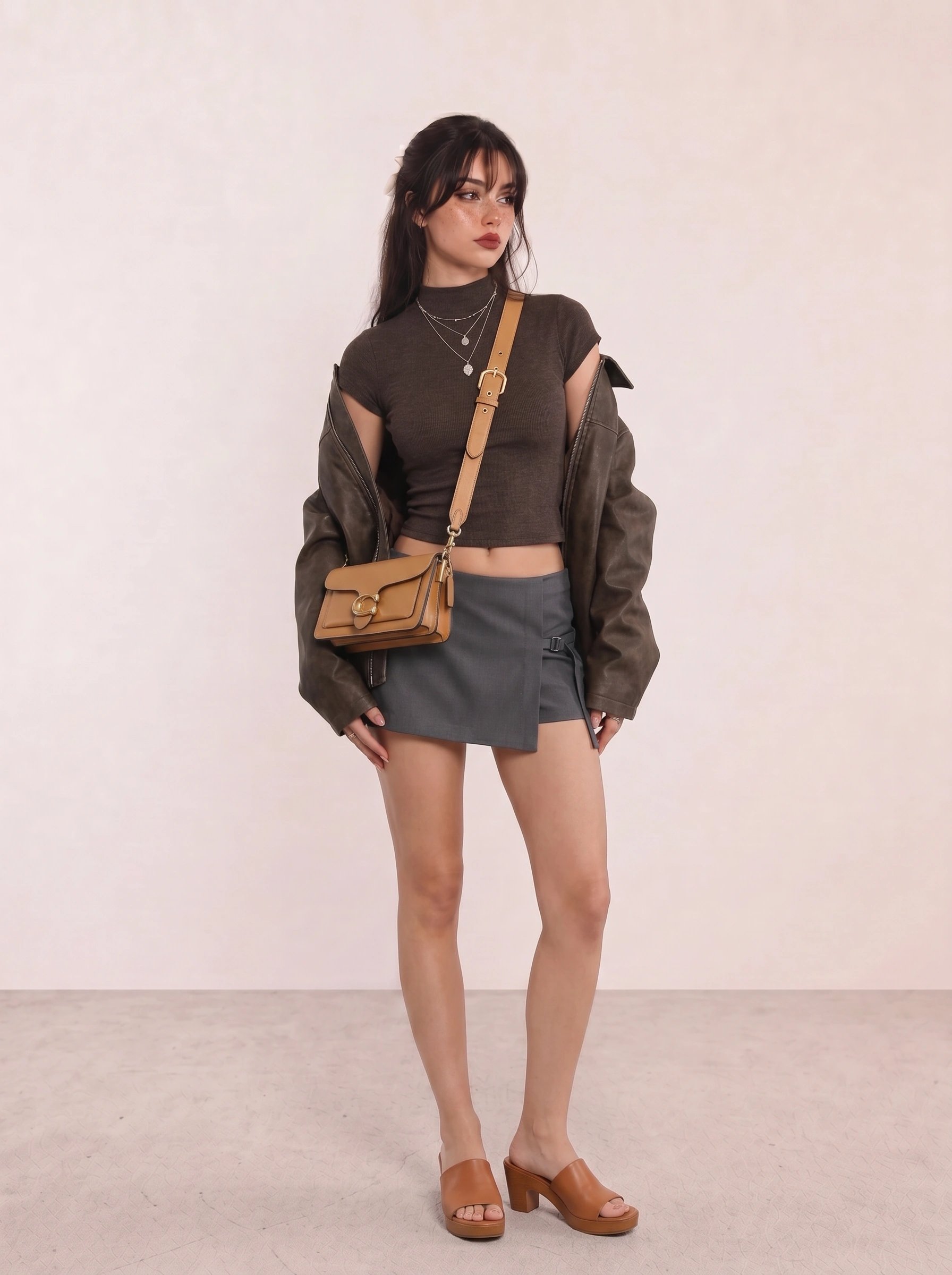
The brown crop top, leather jacket and grey wrap skirt layers a summer crop top under a jacket so the cropped length stops being a warm-weather liability. The wrap skirt sits at the natural waist and closes the gap the crop top leaves. Closed-toe flats finish it for a mild afternoon.
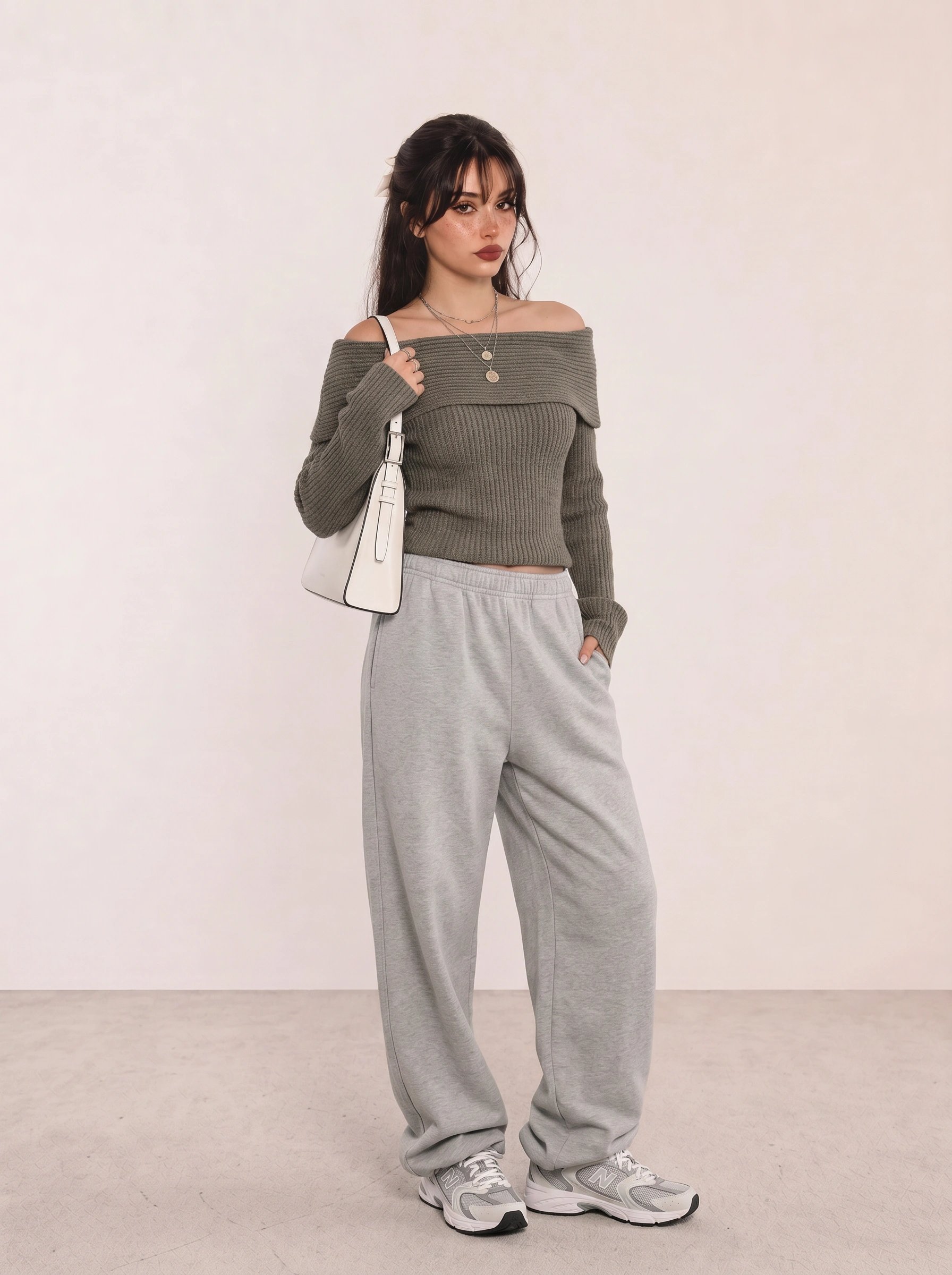
For a weekend errand run, a khaki off-shoulder top with striped jogger pants trades summer shorts for full-length joggers while keeping a lightweight top. The joggers cover the leg and cut the wind, which is the part that matters early in the season. Keep a light cardigan in your bag for the shoulder that stays bare.
Dressing for the Day That Can't Decide
The hardest days start at 48 degrees and hit 70 by 3 p.m. The rule here is one removable mid-layer over a summer base: dressed for the cold morning, stripped back for the mild afternoon. Our pieces on September in-between weather outfits and light layering for early fall go deeper on this.
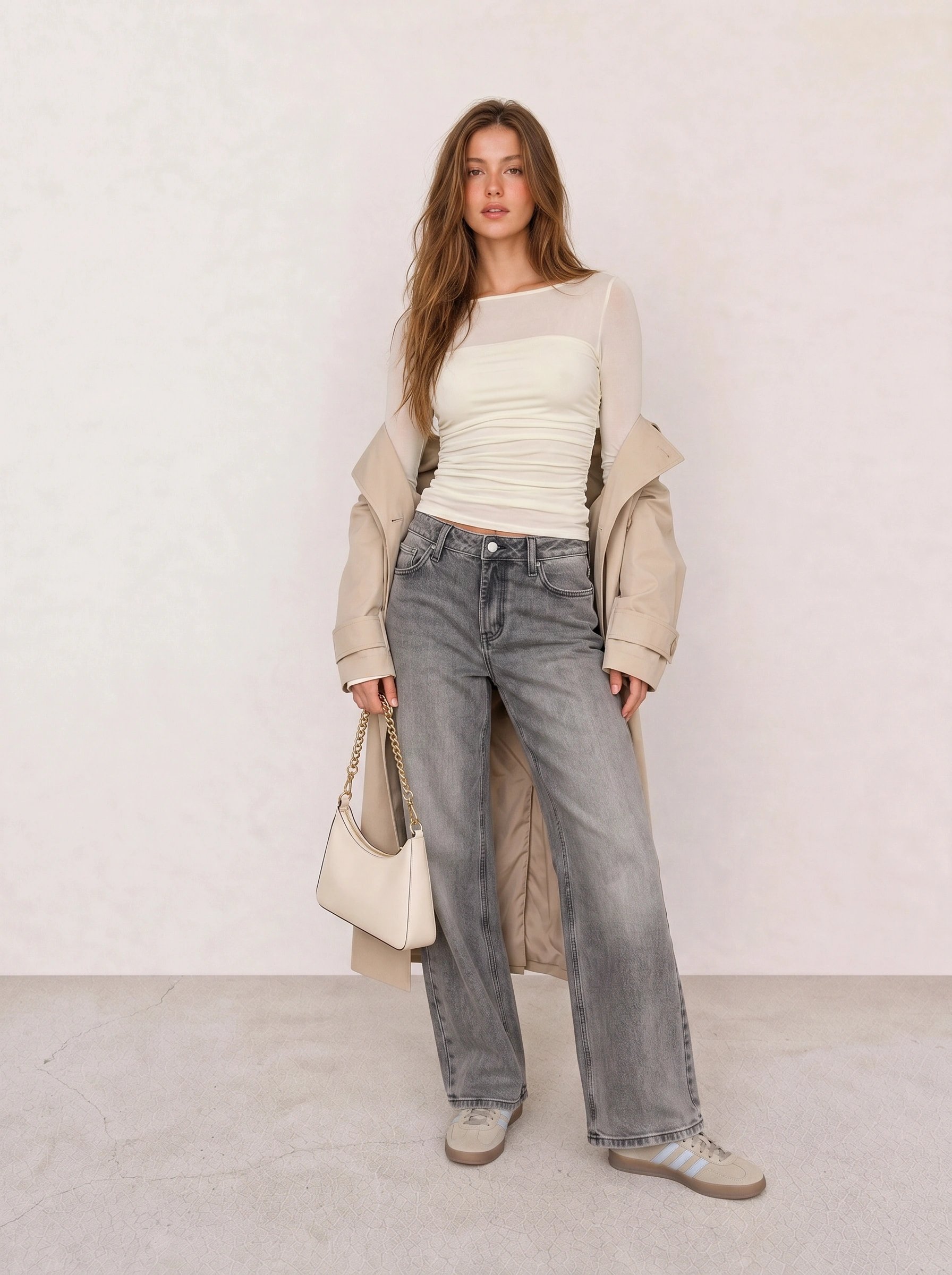
The cream mesh-panel top with grey wide-leg jeans and a trench is the clearest version of the removable-layer approach. The trench is unlined, so it blocks wind in the morning and goes in your bag by noon. The mesh top underneath is genuinely a summer piece and stays comfortable once the coat is off. Heavy denim like this gets hot fast, so save it for a genuinely cool day.
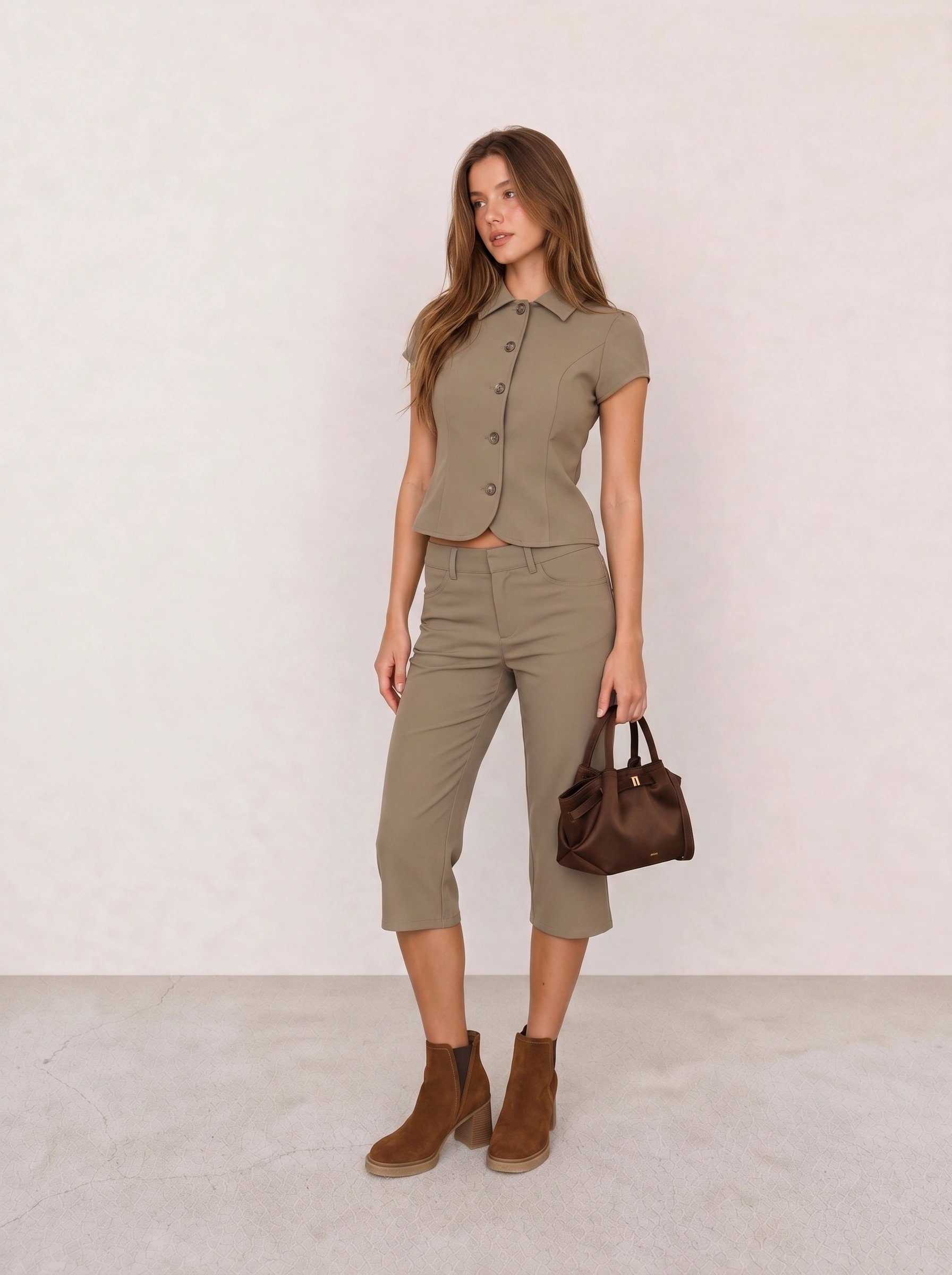
Cropped at the ankle for a reason: a khaki collared top with capri pants vents heat fast when the afternoon warms up. The collared top has enough structure to work alone once you shed an outer layer. Add a thin knit over the shoulders for the commute and lose it by mid-morning.
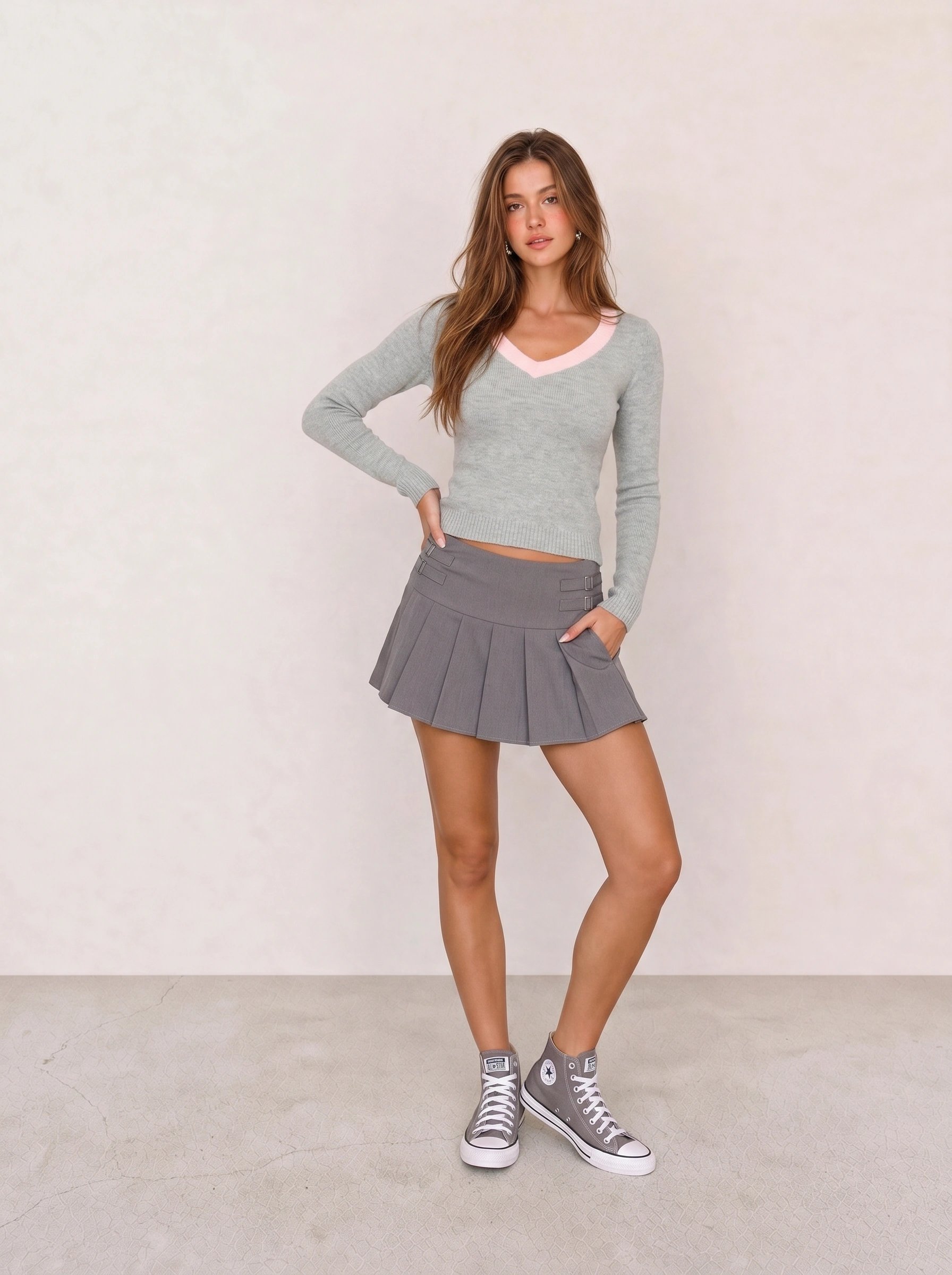
A fine-gauge knit, not a heavy one: the grey and pink v-neck sweater with a pleated mini skirt regulates well across a 20-degree swing. The v-neck vents at the chest when you warm up. The pleated skirt is a summer shape that carries into fall once you add tights and a low boot.
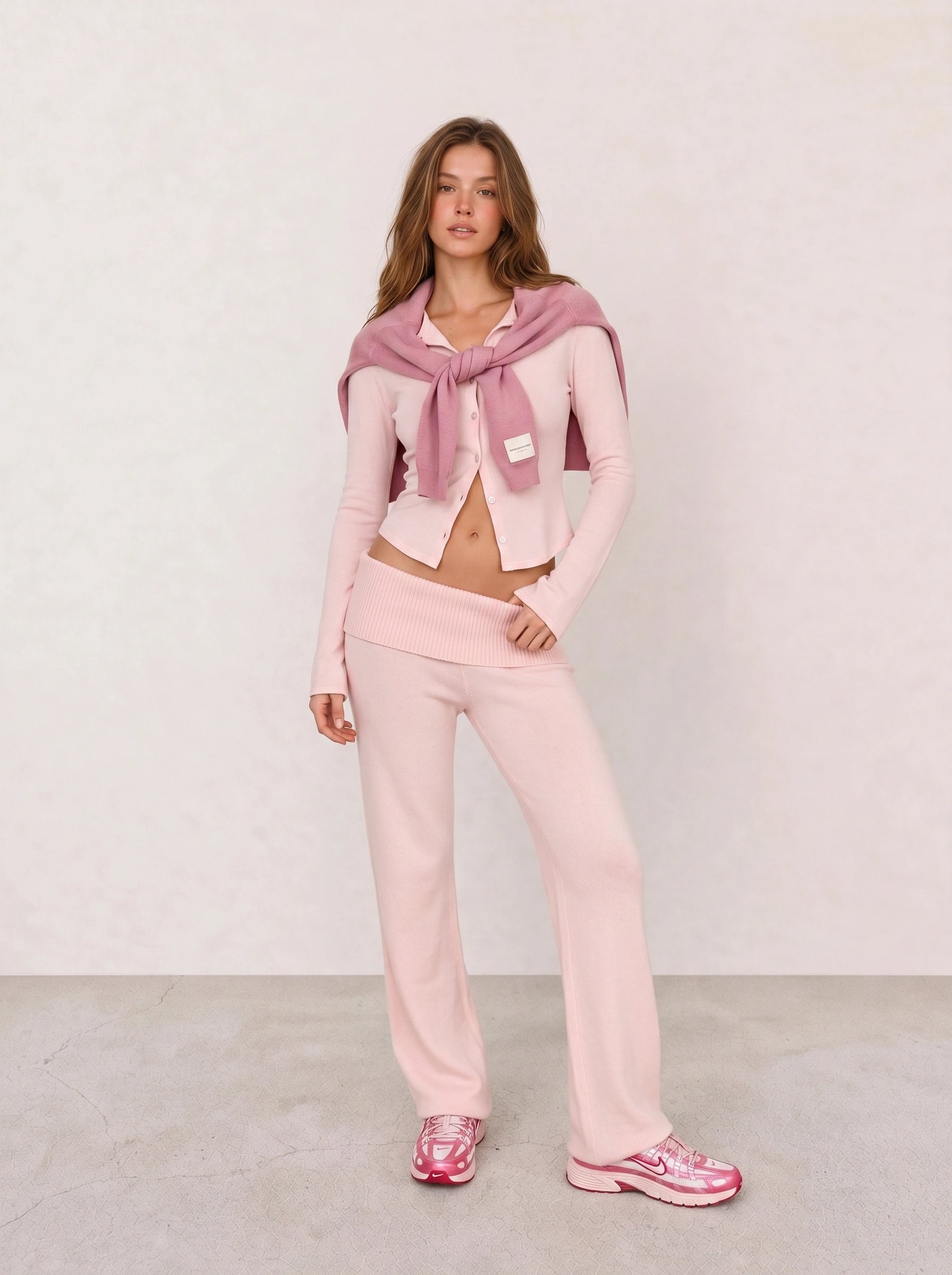
A pink cardigan set with a scarf and sneakers splits the warmth across two light pieces instead of one thick one. Button the cardigan and add the scarf for the cold start; open the cardigan and pocket the scarf when it warms. The sneakers keep it walkable for a full day on your feet.
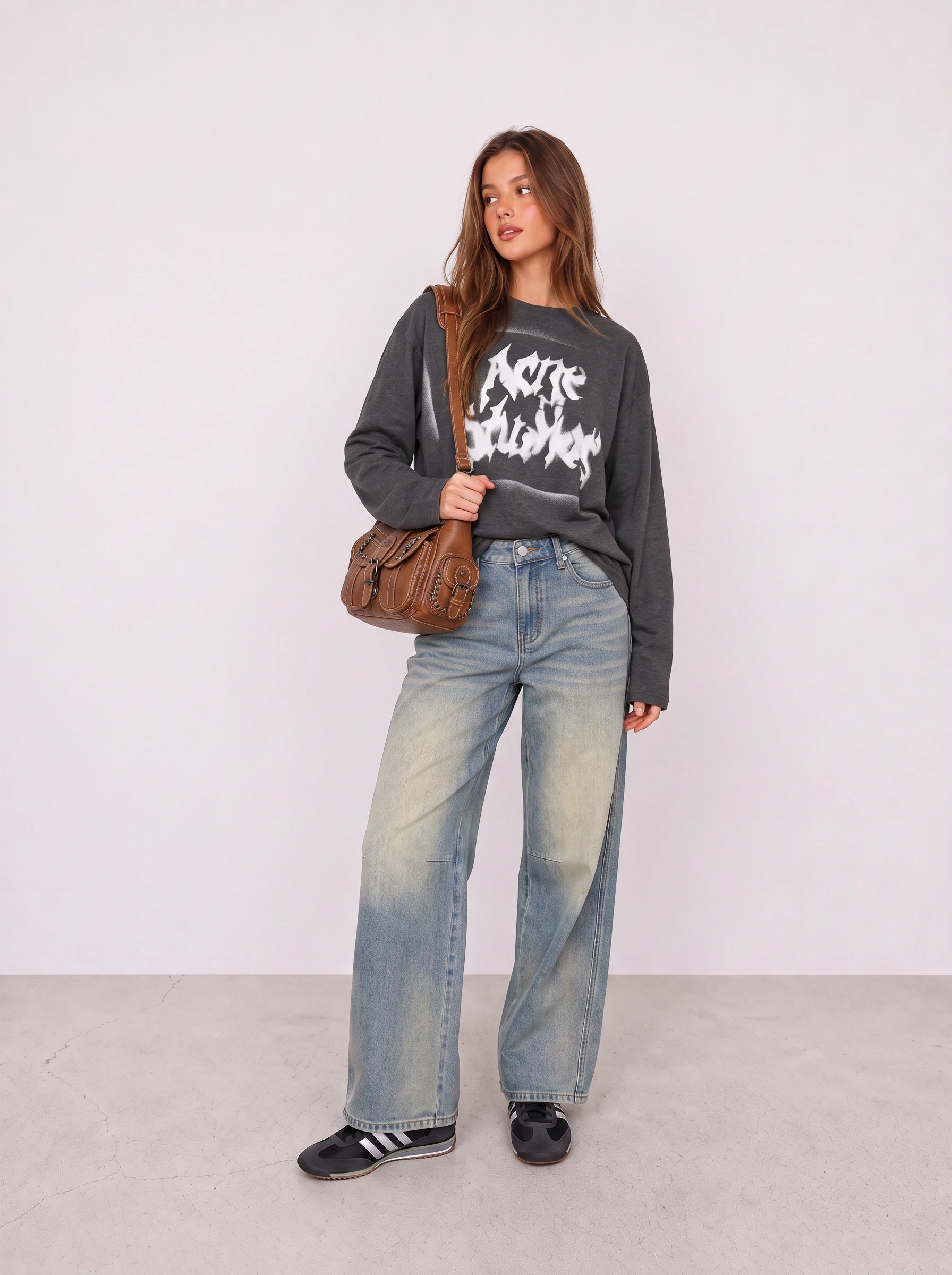
The charcoal graphic tee with wide-leg jeans is the base you build on. Full-length denim covers the leg, and the cotton tee is the exact thing you wore all summer. On a cold morning this takes an overshirt or a denim jacket on top and nothing else.
When It Finally Turns: Full Autumn Looks
By late October the temperature stops climbing back up in the afternoon. This is when knits become the base layer rather than the accent, and boots replace sneakers by default. Students facing the same shift on campus can check our guide to autumn school outfits.
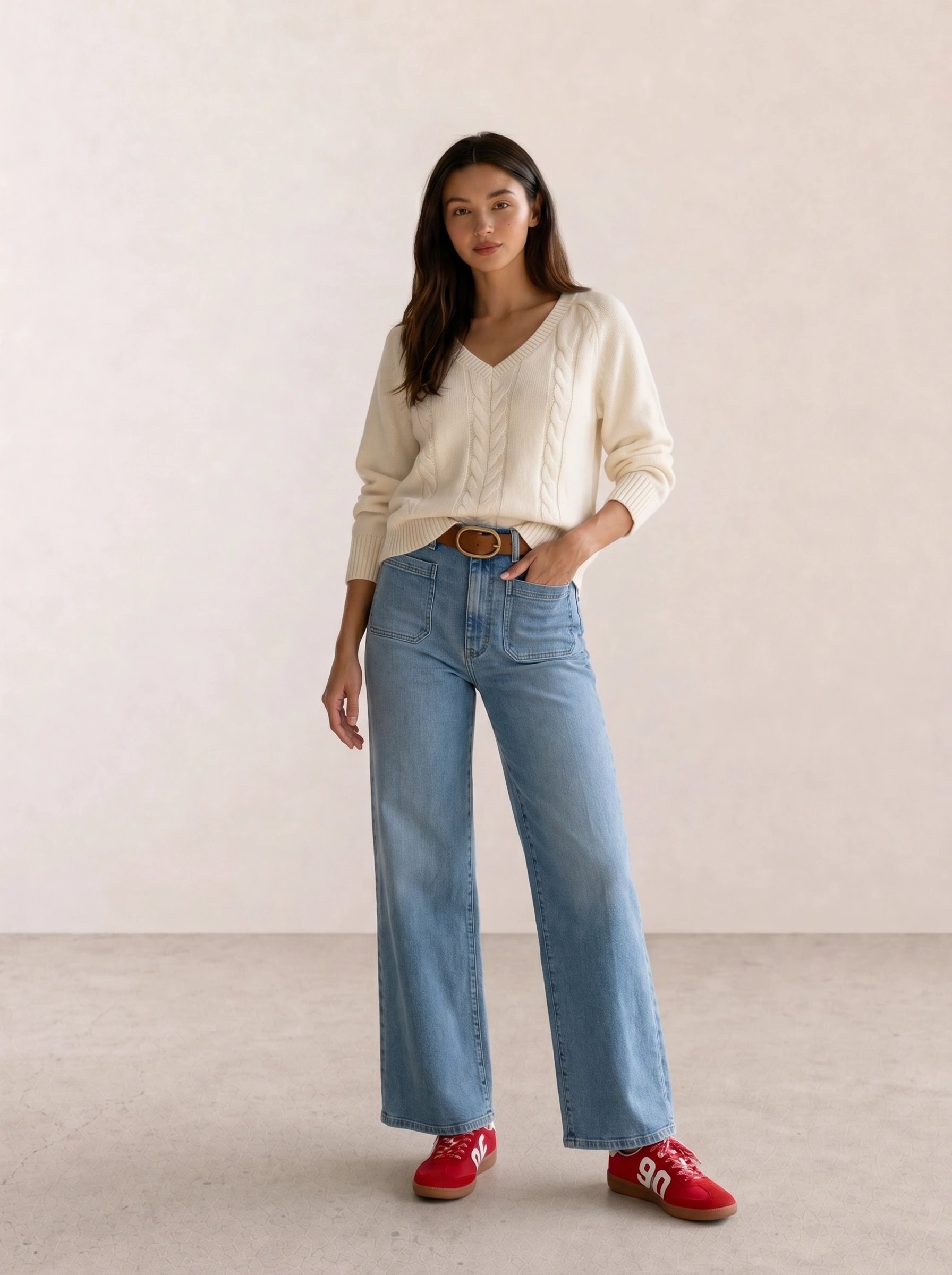
Light denim keeps this from going fully heavy: a cream cable-knit sweater with light wash wide-leg jeans. The cable knit has real loft and traps warm air in the twist of the yarn, so it holds up into the 40s without a coat. This is the wardrobe fully turned over.
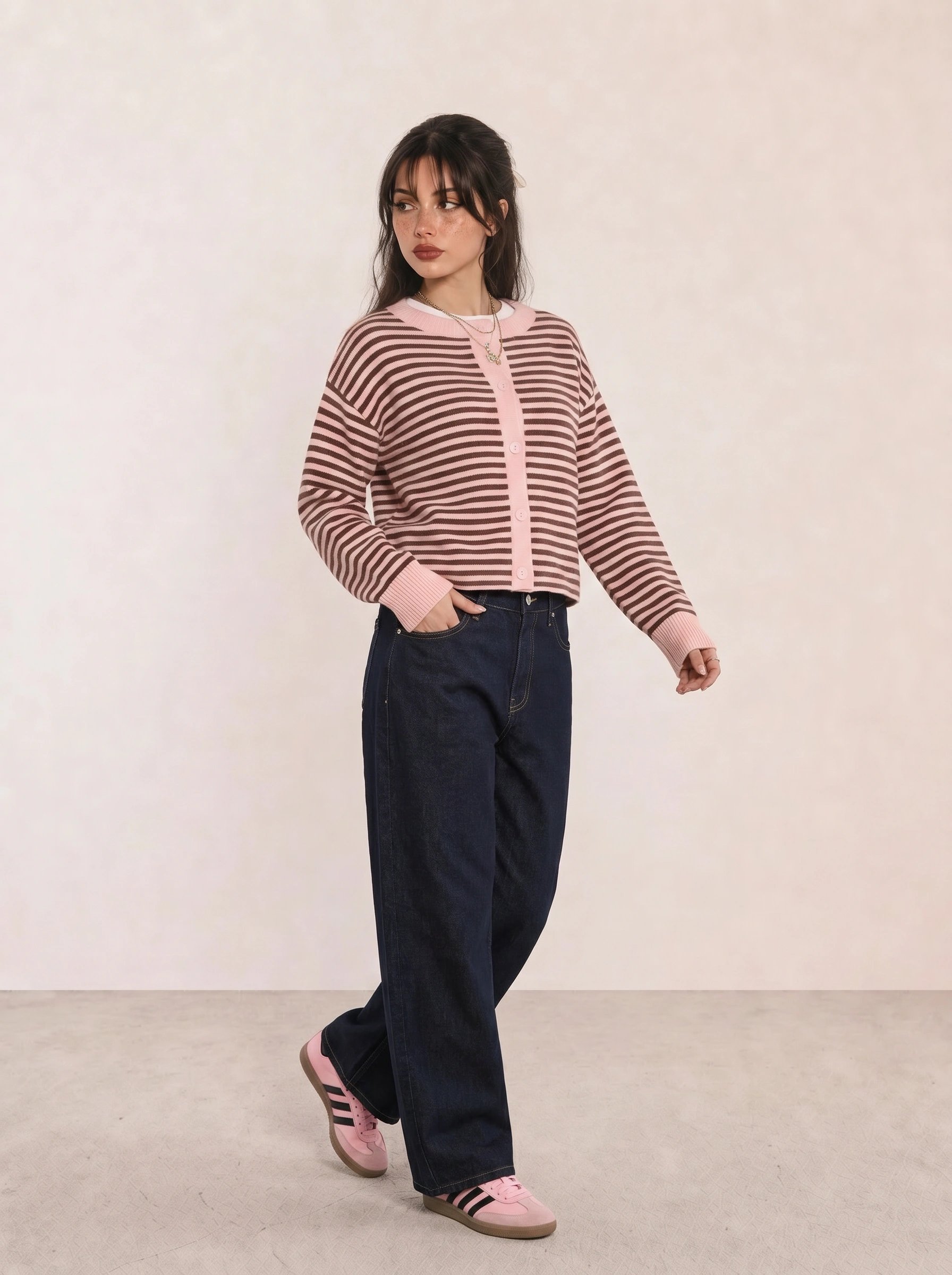
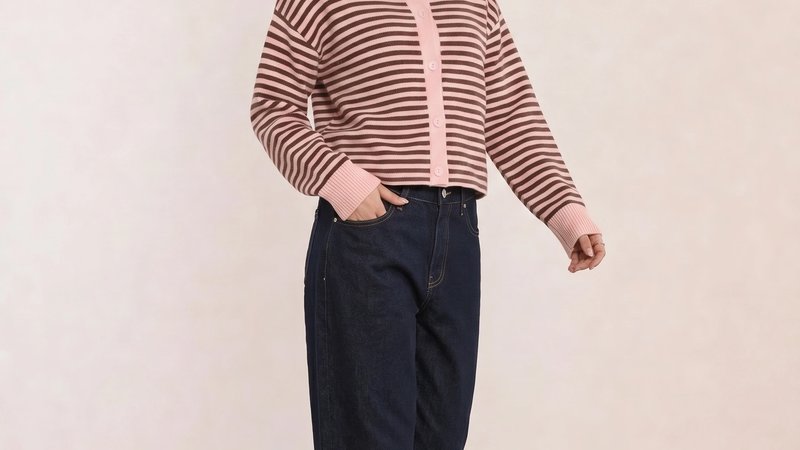
The striped cardigan with dark indigo wide-leg jeans leans on the deeper indigo to shift the whole look into fall. A buttoned cardigan works as a top on its own here, and layers cleanly under a coat when November arrives. Dark denim also hides the salt and mud that come with the season.
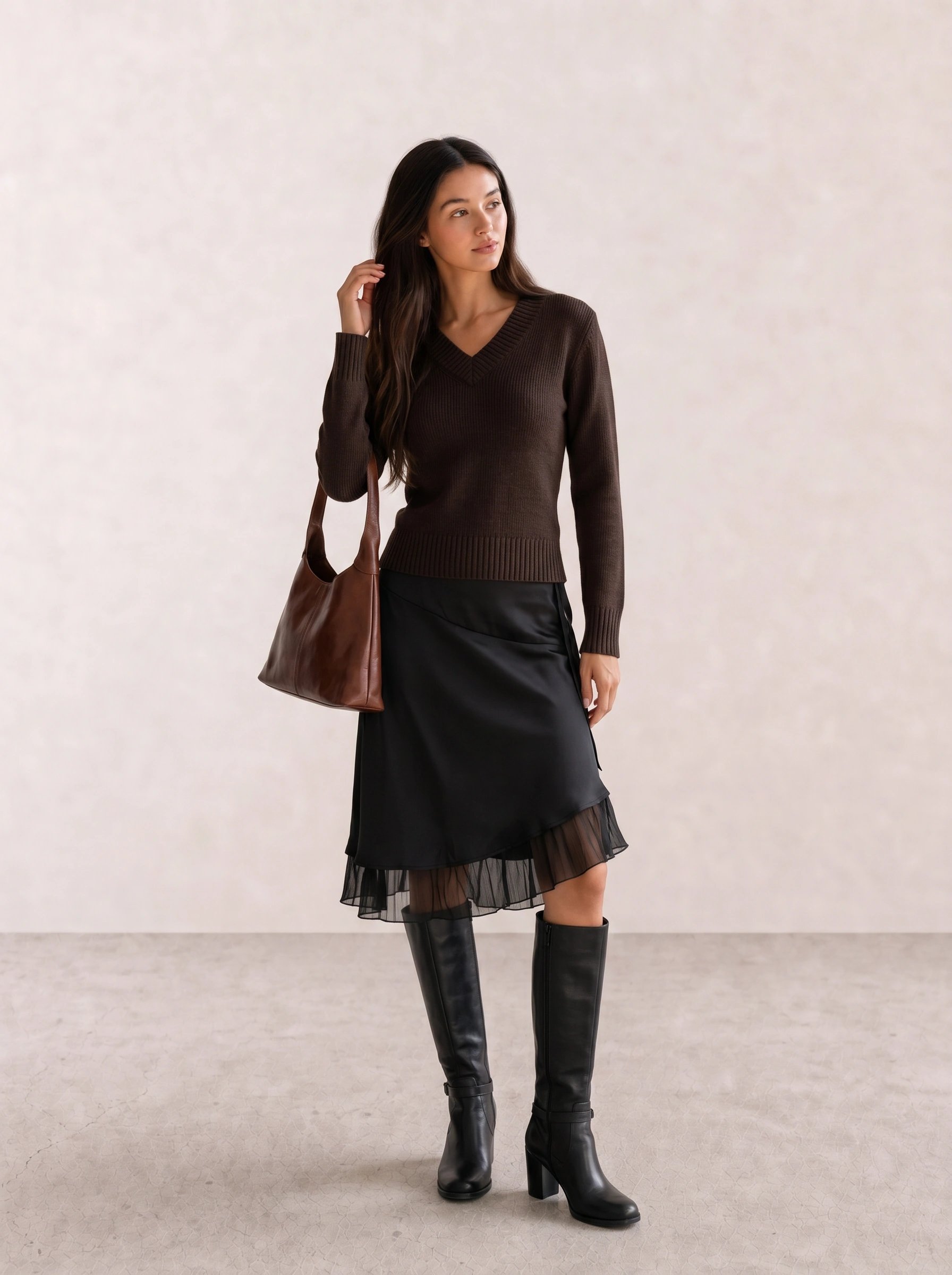
A brown v-neck sweater with a black midi skirt and knee boots is how a skirt survives real cold. The midi length plus knee boots leaves only a few inches of leg, and tights close that gap. The sweater tucked at the front keeps the waist defined under all that fabric.
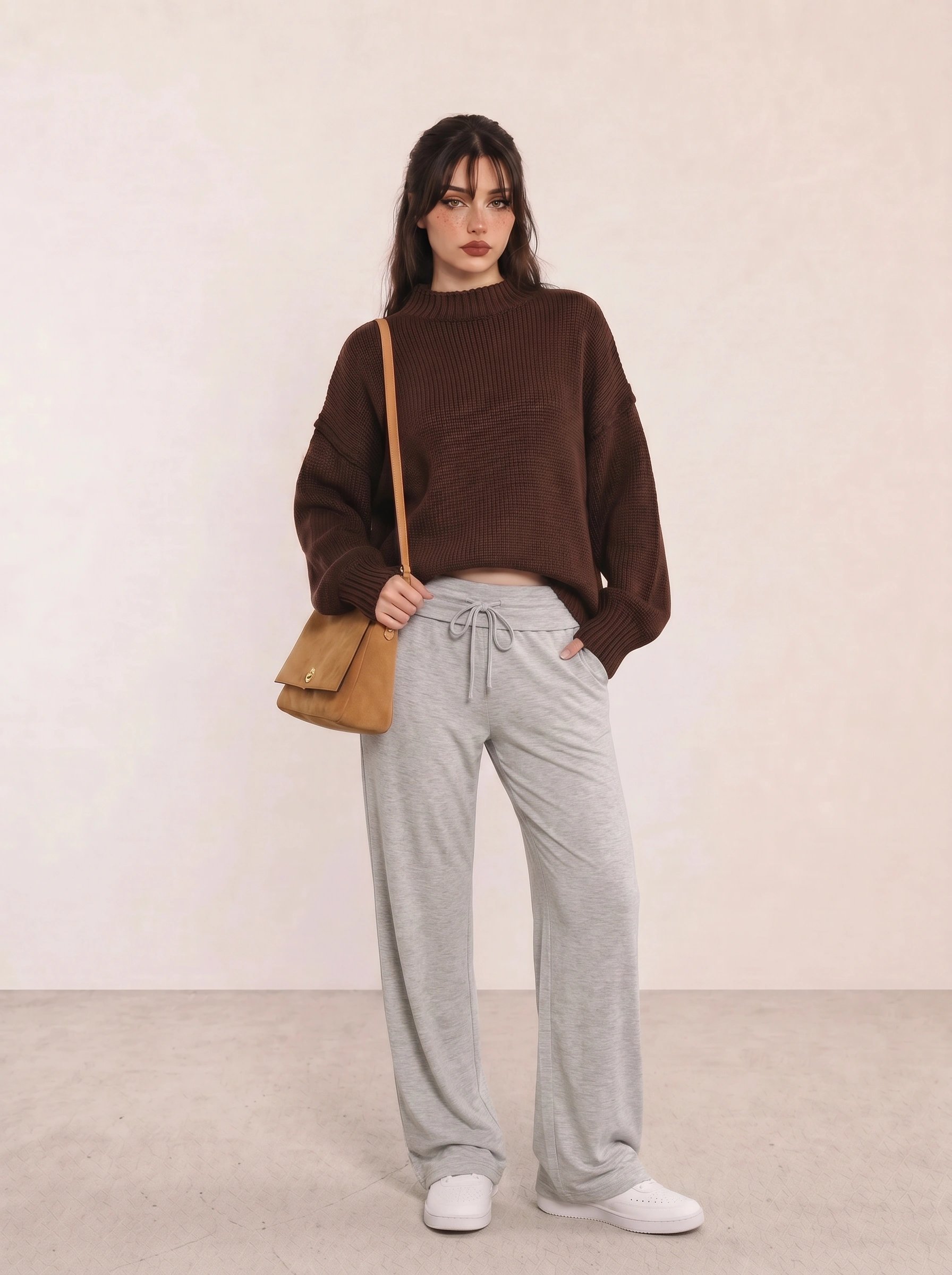
The brown chunky sweater with grey drawstring pants is the one you reach for without thinking on a cold morning. The heavy gauge does the insulating, and the soft drawstring waist means it stays comfortable through a long day. Neutral on neutral keeps a bulky knit from looking like loungewear. The trade-off: this much volume can swamp a smaller frame, so keep the pants cropped at the ankle.
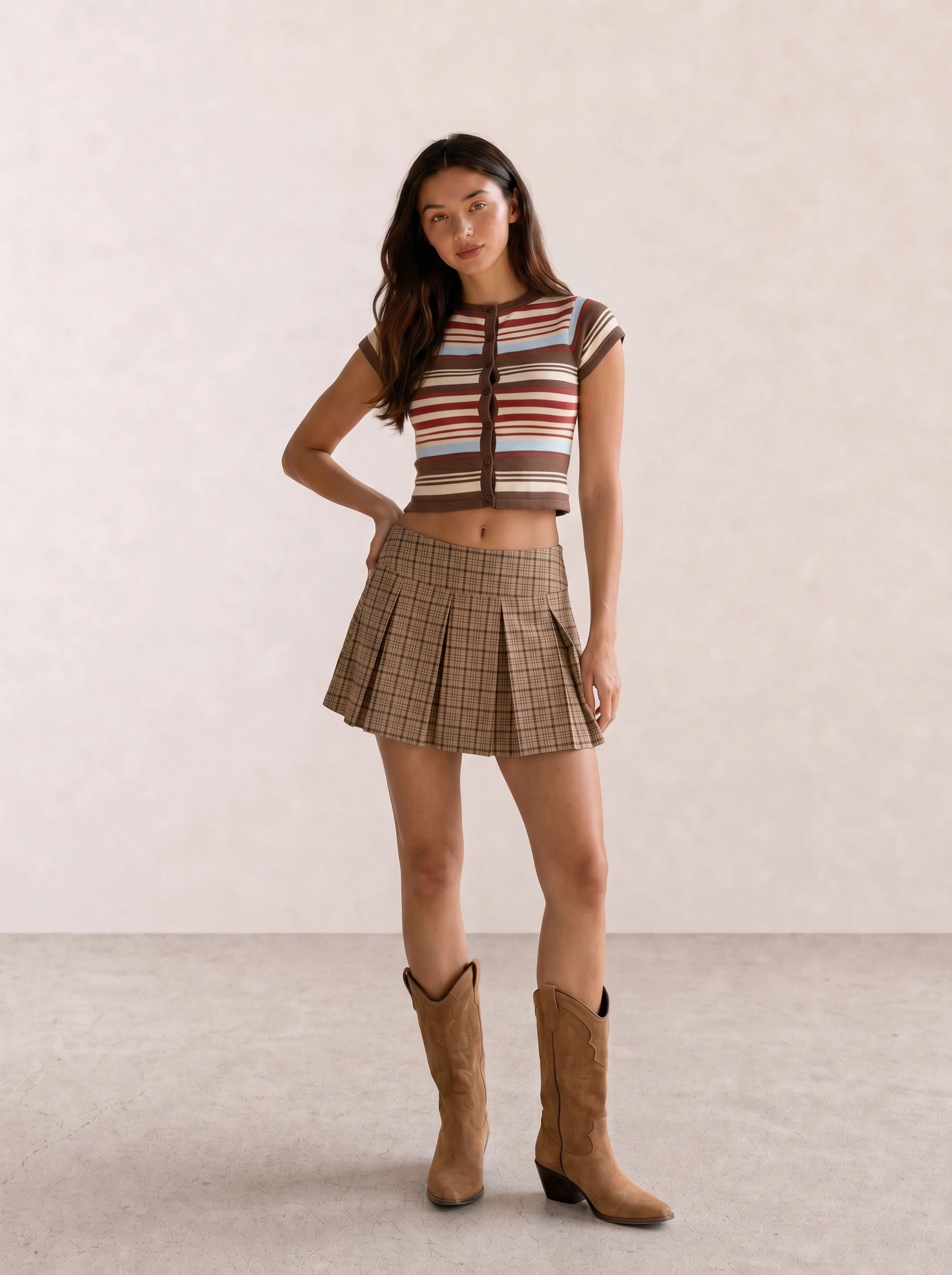
Plaid signals deep fall more than any other print, and the striped cardigan with a plaid skirt and tan western boots brings it in without going full costume. Mixing stripe and plaid works because both stay in the same warm, muted range. Western boots with a stacked heel are sturdy enough for wet leaves underfoot.
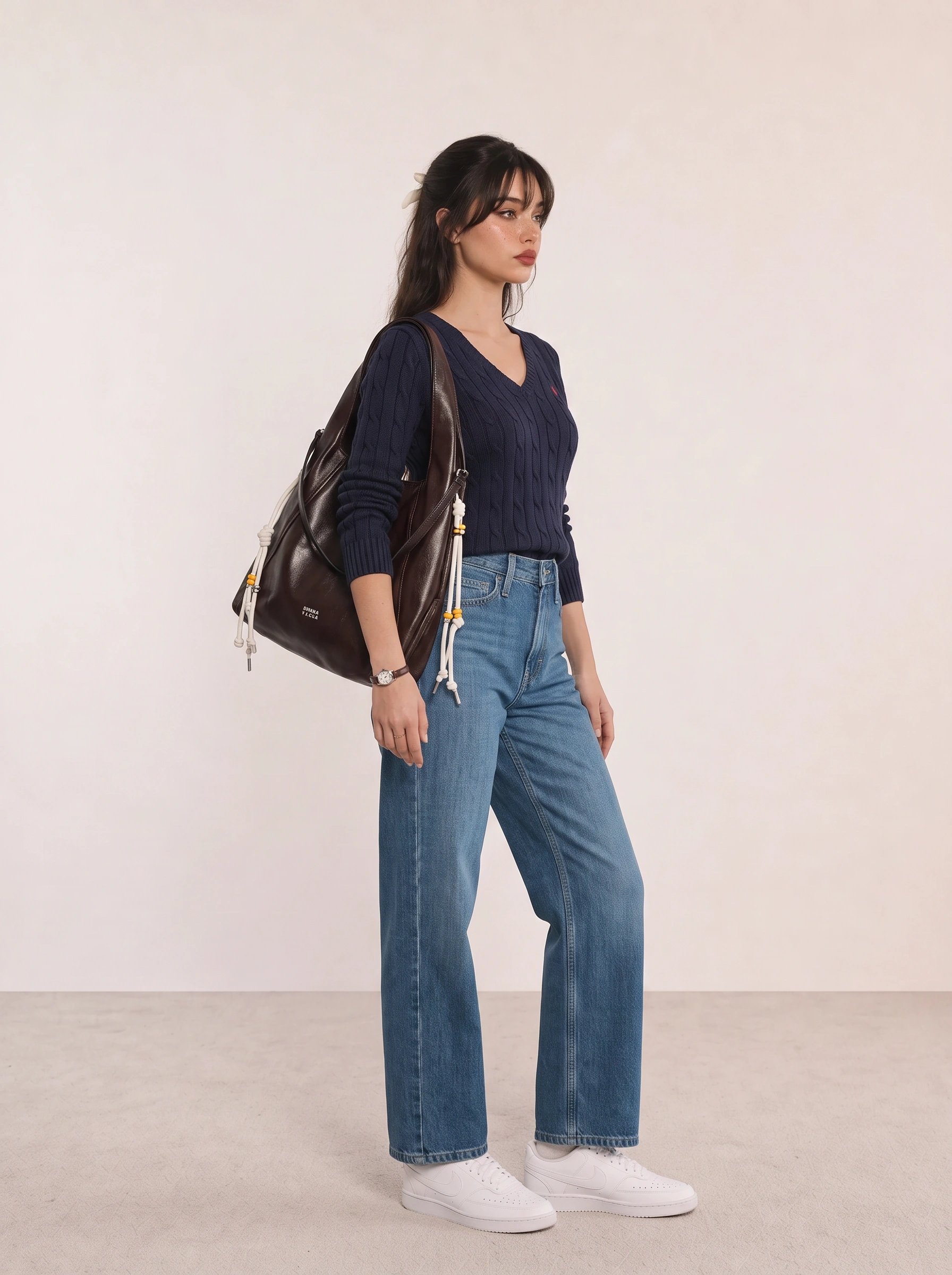
A navy cable-knit sweater with jeans is the plainest full-autumn look on this list, and that is the point. Cable knit plus mid-blue denim plus sneakers or boots covers most of November. When it gets colder, add a wool coat over the top and the rest of the outfit stays the same.
Common Transition-Dressing Mistakes
Packing away the summer pieces too early. Most sundresses, tees, and lightweight skirts have another six to eight weeks of wear in them with a jacket on top. Boxing them up in early September means buying new transitional clothes you already own.
Jumping straight to a winter coat in 60-degree weather. A wool overcoat at 62 degrees leaves you overheated by the second block. A denim jacket, trench, overshirt, or leather jacket covers everything from the high 40s to the low 70s.
Layering with pieces that do not come off cleanly. A pullover you have to remove over your head, or a scarf that unravels your whole outfit, defeats the point. Choose a mid-layer that unbuttons or unzips and folds flat into a bag.
Wearing bare legs with boots once mornings hit the 40s. The look reads fine in photos but the ankle gap gets cold fast. Add opaque tights and the same skirt-and-boot outfit stretches another month.
FAQ: Summer-to-Fall Transition
When should I actually switch out my summer clothes?
Wait until daytime highs stay below 60 for a full week, which in most of the US is mid to late October. Before that, your summer pieces still work under a jacket. Move the lightest items to the back of the closet rather than into storage.
What is the one layer worth buying if I only buy one?
An unlined trench or a mid-weight denim jacket. Both block wind, both open fully so you can shed them at noon, and both go over a dress or jeans without a proportion problem. A leather jacket is the next pick if you want more edge.
Can I still wear sandals in September?
Yes, on warm afternoons in the first half of the month. Closed-toe styles and slingbacks stretch further than strappy flats. Once mornings drop into the low 50s, switch to a loafer or ankle boot and keep the sandals for midday only.
Work through the stages in order. Keep wearing the summer pieces with one layer for as long as the afternoons stay mild, move to a removable mid-layer once the mornings turn cold, and switch to knits and boots only when the temperature stops rebounding. The dresses and tees go back in the closet, not the donation bag.