Is Old Money Style Still Trending in 2026?
Old money style dominated Pinterest and TikTok for three years. Here's why it's still trending in 2026 instead of fading like most aesthetics do.
Redaktionell geprüft: Vor der Veröffentlichung prüfen wir Tragbarkeit, Proportionen und Alltagstauglichkeit. Unsere redaktionelle Arbeitsweise und Bildrichtlinie erklären wir unter Über uns; Angaben zur Unabhängigkeit bei Affiliate-Links stehen im Affiliate-Hinweis.
Most aesthetics that peak on Pinterest have a shelf life of about eighteen months. Cottagecore surged, then thinned out. Y2K had its moment, cooled, then came back diluted. Old money style has done neither. It has held steady on Pinterest boards and TikTok style tags since 2022, and if anything, the searches around it have gotten more specific — people aren't asking what old money style is anymore, they're asking how to build it piece by piece.
That's unusual, and it's worth asking why. Trends built on a single silhouette or a single decade reference tend to burn out fast because there's nowhere left to take them. Old money style was never built on a silhouette. It was built on a set of principles — tailoring, tonal restraint, fabric quality — that can absorb new pieces every season without losing its identity. That's the actual reason it's still trending in 2026, and it's also the reason the aesthetic is quietly evolving into something more wearable than the version that first went viral.
Why Old Money Style Refuses to Expire
The assumption most people make about old money style is that it's just quiet luxury with a different name — muted colors, expensive-looking basics, done. That's not quite right. Quiet luxury is about concealing cost. Old money style is about implying inheritance — the idea that the clothes have always been there, not that they were recently acquired. That distinction is why old money leans harder into tailoring history (equestrian jackets, riding boots, prep-school shirting) while quiet luxury leans into minimalist cashmere and unbranded logos. Confusing the two is the most common styling trap in this category, and it's why some "old money" outfits online read as generically expensive rather than old money specifically.
Here's the part that actually explains the longevity. Fast-fashion trends are driven by novelty — a new silhouette, a new color, a new proportion that makes last season's version look dated. Old money style is driven by the opposite instinct: it borrows credibility from clothes that were never trying to look new in the first place. A well-tailored trouser or a proper button-down shirt doesn't date the way a micro-mini or a going-out top does, so the aesthetic never hits the point where it looks embarrassing in old photos. That's structurally different from how most Pinterest-era trends behave, and it's the single biggest reason this one hasn't collapsed.
If I had to point to one reason old money style keeps recruiting new followers instead of losing them, it's that the entry cost feels lower than it looks. A tailored white shirt and a good pair of trousers reads old money instantly — you don't need six pieces, you need two that fit properly.
What the Trend Data Actually Shows in 2026
On Pinterest, old money style has moved from a seasonal spike pattern to something closer to a steady baseline — the searches don't disappear between trend cycles the way they do for more novelty-driven aesthetics. On TikTok, the tag has splintered into sub-categories (old money office, old money date night, old money on a budget), which is usually a sign a trend has matured into a genre rather than faded into irrelevance. When an aesthetic gets specific enough that people are searching for niche applications of it, that's evidence of depth, not decline.
Google search behavior tells a similar story. Broad definitional searches ("what is old money style") have leveled off, while long-tail, purchase-adjacent searches ("old money outfit for work", "old money style on a budget") have kept climbing. That shift — from curiosity queries to application queries — is what a maturing, durable trend looks like, not a dying one. For a full breakdown of the aesthetic's building blocks, our complete guide to old money style covers the pieces, the history, and the price tiers in depth.
How to Dress Old Money in 2026 — Five Outfits That Show the Shift
The clearest way to see how the aesthetic has moved is to look at what's actually being worn right now, not what defined it in 2022. Here are five outfits from our old money category, each showing a slightly different version of where the trend is headed.
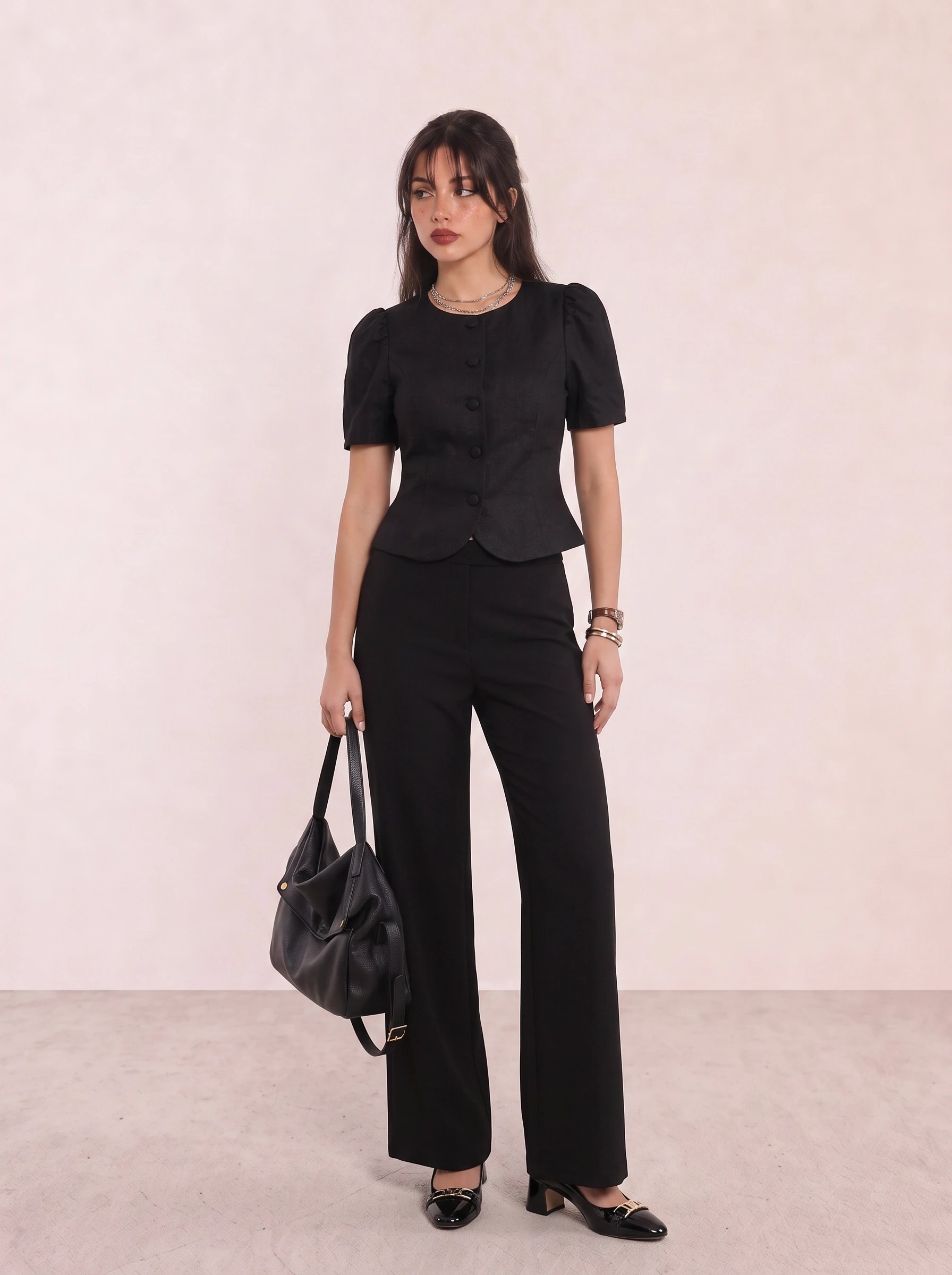
The mechanism here is proportion, and it's the most instructive outfit on this list for anyone new to the aesthetic. Wide-leg trousers only read as old money — rather than just baggy — when the top half is controlled. The puff sleeve adds volume at the shoulder, the trouser adds volume at the leg, and the waist is left as the single defined point between them. Without that waist definition, the silhouette collapses into shapeless rather than tailored.
The formula: a structured blouse, a wide-leg trouser in the same tone, and a pointed block heel. Monochrome black does more work than people expect — it removes any competing color decision and lets the tailoring itself be the focal point.
This is the outfit for a Monday morning where the meeting matters and you don't want to think about what you're wearing once you're in the room. If you're building an old money wardrobe from zero, start here — the all-black tonal approach is the most forgiving entry point because it hides fit imperfections that a color-blocked outfit would expose.
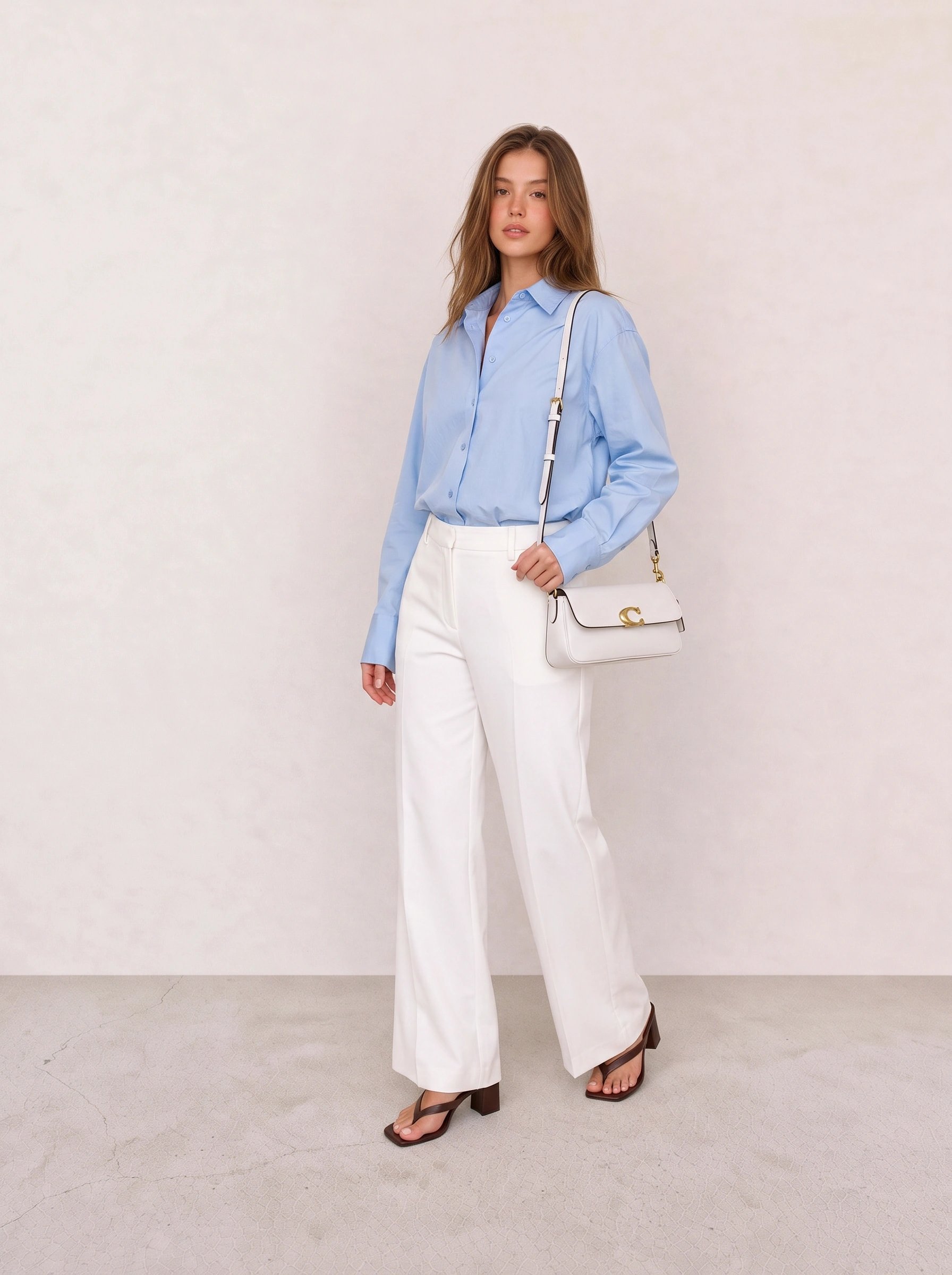
The color logic is the interesting part of this one. Light blue and white sit close enough on the color wheel to read as a single tonal family rather than a matched set, which is exactly the effect old money dressing is after — coordinated, but not so coordinated it looks purchased as a unit. A true matching set would push this toward resortwear; the slight tonal separation keeps it in tailoring territory.
The oversized cut on the shirt is doing more than adding relaxed volume — it references the borrowed-menswear tradition running through old money style's actual history, back to the boarding-school and country-club dressing of the 1960s and '70s, where women wore their brothers' or husbands' shirts as a practical, not aesthetic, choice. That's a different lineage than most people assume when they picture the trend.
Worth flagging here, since it's the mistake that undoes more old money outfits than any other: reaching for logos or obviously branded hardware. The entire aesthetic is built on the absence of proof — the moment a bag or belt announces its price, the outfit stops reading as inherited and starts reading as bought for the occasion.
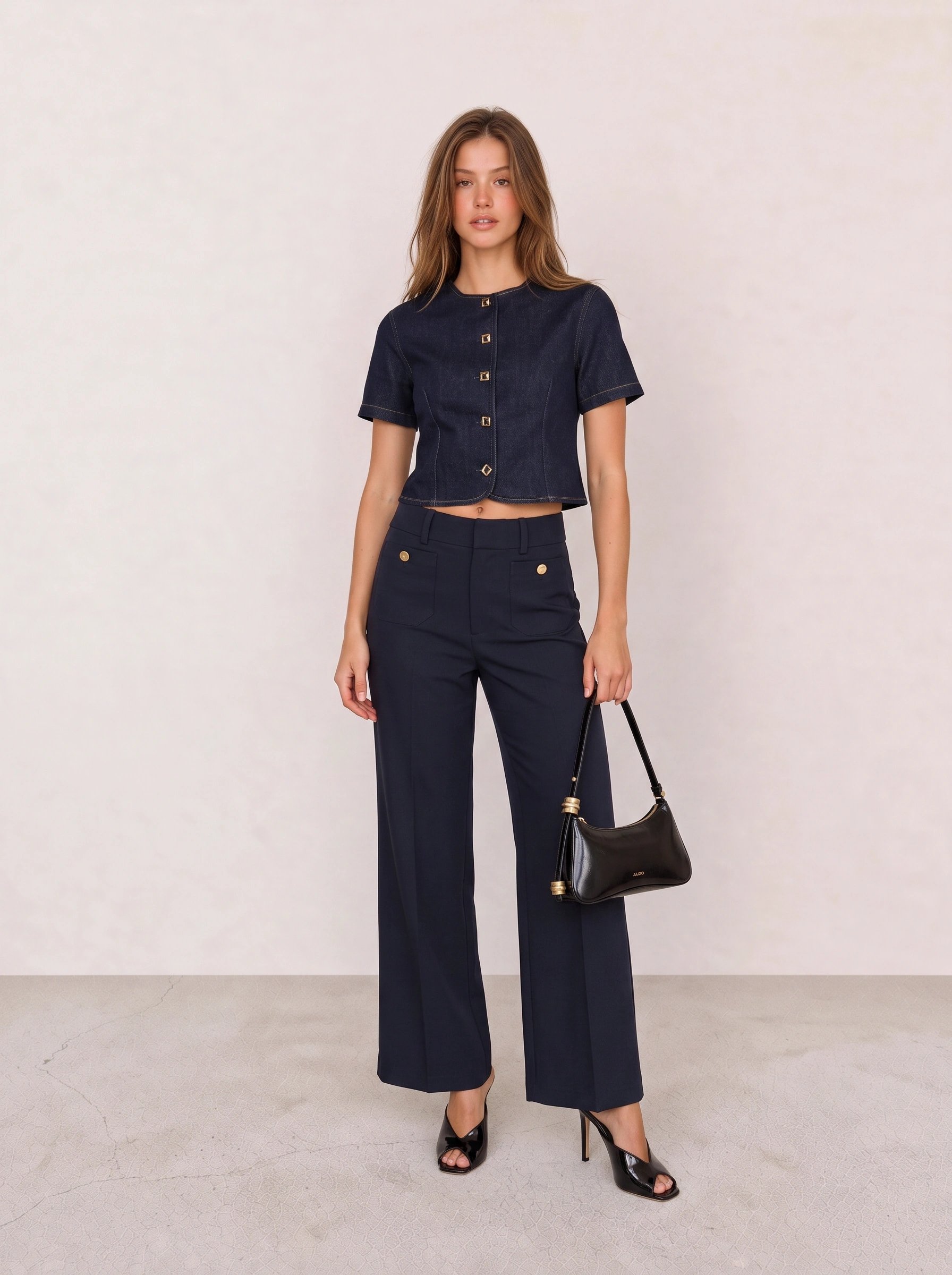
Easiest outfit on this list to wear on repeat. A denim button top swapped in for a traditional cotton shirt keeps the same tailored silhouette but adds enough texture that it doesn't read as office-only — this one moves from a weekday desk to a Saturday lunch without a single change.
Skip the statement jewelry here. A peep-toe mule and a structured bag are already doing the finishing work — anything louder competes with the denim's texture instead of complementing it.
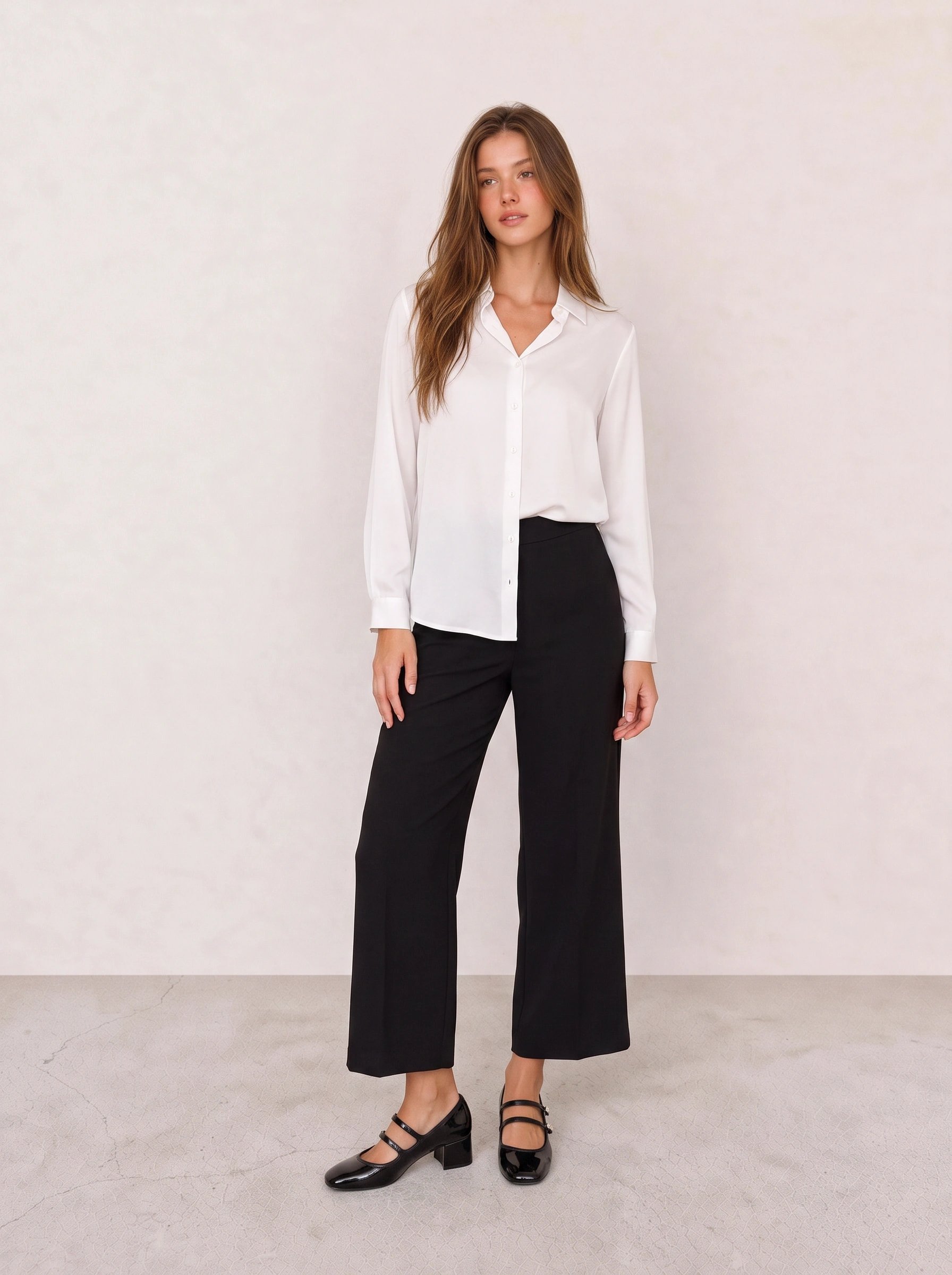
This is where the contrast argument matters. Ivory against black is a harder pairing to get right than most people assume — too much of either and the outfit tips into evening formalwear or funeral-adjacent. The satin blouse solves it by adding a second variable: sheen. The fabric's light catch keeps the ivory from reading flat, so the eye registers texture contrast alongside color contrast, not just a stark two-tone split.
Without the satin, this outfit reads as a plain white-and-black office set — competent, forgettable. With it, the same silhouette reads considered. That's the whole argument for spending on fabric quality over logo recognition: the difference is invisible in a product photo and obvious the moment you see it move.
This is the outfit for a dinner reservation you made three weeks in advance — the kind where you want to look like getting dressed took no effort at all, even though the cropped trouser length and the satin sheen took real thought.
If you only invest in one piece from this outfit, make it the blouse. A cheap satin substitute pills and loses its sheen within a few washes, and a flat, lifeless ivory top undoes the entire contrast effect the outfit depends on.
This is also where the trend evolution shows up most clearly. The 2022–2023 version of old money style leaned on obvious signifiers — quilted bags, crest buttons, riding boots worn without any actual riding context. The 2026 interpretation has quietly dropped most of that in favor of fabric quality and fit as the signifiers instead. Satin over logo. Tailoring over trim. It's a subtler version of the same idea, and it's a large part of why it hasn't dated the way the original TikTok wave has.
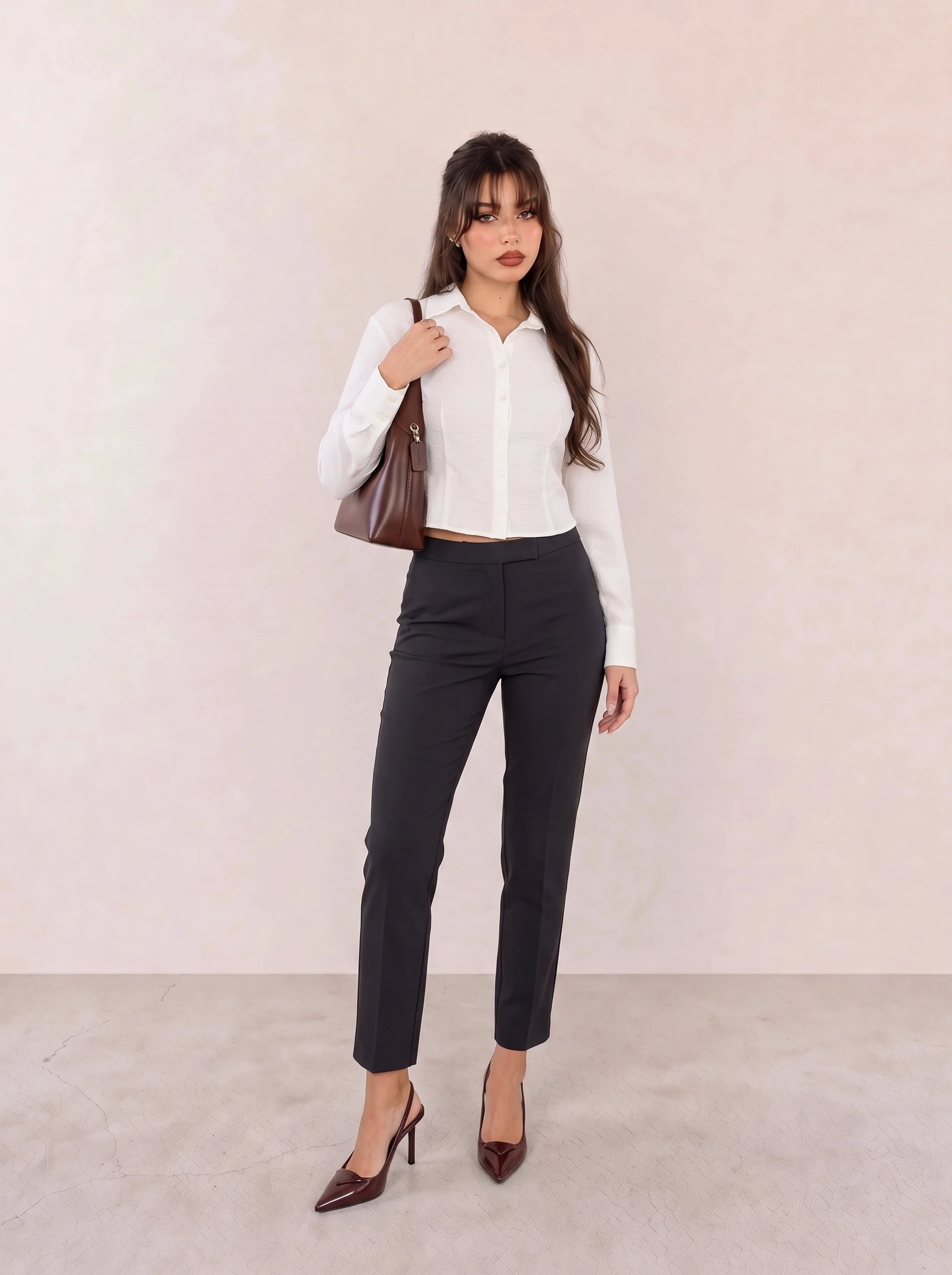
The strongest detail here is the burgundy heel against an otherwise ivory-and-black outfit. Old money dressing is often assumed to mean zero color — that's actually a misreading of the aesthetic. One saturated, jewel-toned accent (burgundy, forest green, deep navy) against a neutral base is a signature of the look's more traditional, country-house-adjacent roots. It's restraint with one exception, not restraint with no exceptions.
The formula: a linen shirt for texture, a tapered (not wide) trouser for a change of silhouette, and the burgundy heel as the single break from neutral. Swap the heel for black and the outfit gets safer but noticeably less interesting.
Where Old Money Style Is Headed Next
The counterintuitive part of this trend is that most people expect an aesthetic this associated with tradition to eventually calcify into a costume — riding boots, crests, and quilted bags worn as a uniform rather than a wardrobe. The opposite is happening. As old money style has matured past its initial viral phase, it's shed the costume-like signifiers and kept the underlying logic: tailoring, tonal restraint, fabric that holds up. That's a strange trajectory for an internet trend, and it's the reason this one is likely to still be relevant well past 2026, long after the aesthetics that launched alongside it have been forgotten.
The next shift is likely to be generational rather than seasonal — younger versions of the aesthetic borrowing more from Ivy prep and less from period-drama costuming. Watch the trousers and the fabric choices, not the accessories. That's where this trend has always told the truth about where it's going.