The Old Money Loafer Buying Guide: Penny, Horsebit & Tassel
Penny, horsebit, or tassel — this old money loafer buying guide breaks down leather quality, color choice, and how to style each pair.
Redaktionell geprüft: Vor der Veröffentlichung prüfen wir Tragbarkeit, Proportionen und Alltagstauglichkeit. Unsere redaktionelle Arbeitsweise und Bildrichtlinie erklären wir unter Über uns; Angaben zur Unabhängigkeit bei Affiliate-Links stehen im Affiliate-Hinweis.
Loafers are the one shoe every old money outfit gets asked about most, and also the one most people buy wrong. Not because the shoe is complicated — it's the choice between penny, horsebit, and tassel that trips people up, along with the fact that a cheap loafer photographs fine and falls apart within a season.
This guide walks through the three classic silhouettes, what separates real leather from the version that looks like it but isn't, and which colors actually earn their place in an old money wardrobe. Then we get specific — six real outfits, each one showing exactly how the loafer works inside the look, with an honest pro-and-con breakdown for each.
Penny vs. Horsebit vs. Tassel: What's Actually Different
The penny loafer is the original and the most versatile — a plain vamp with a strap and a slot for a coin, which is why it reads as slightly less dressy than the other two. The horsebit loafer, made famous by Gucci in the 1950s, adds a metal hardware detail across the vamp; it's the loafer that leans dressiest and photographs the most "put together." The tassel loafer sits in between — the fringe detail gives it a preppy, East Coast pedigree that traces back to Ivy League style in the 1950s and 60s.
Counterintuitively, the horsebit is the easiest of the three to get wrong. The hardware is meant to be a small detail, not a statement — an oversized or overly shiny bit reads costume rather than considered. If you're buying your first old money loafer, start with the penny. It has the least room for error.
How to Spot Real Leather Quality Before You Buy
Full-grain leather has a slightly irregular surface with visible pores — bonded or coated leather looks unnaturally smooth and uniform. Press a finger into the material: real leather gives slightly and the crease disappears; synthetic stays creased or looks plasticky at the fold.
The sole matters as much as the upper. A leather or Blake-stitched sole flexes with your foot and can be resoled — a glued rubber sole is the clearest sign of a mass-market shoe built to be replaced, not repaired. This is where budget makes the most sense to spend: a well-made pair, properly cared for, outlasts three cheap ones.
Black, Brown, or Burgundy: Choosing Your First Pair
Black is the most formal and the safest with tailored trousers or a monochrome look — it reads office-appropriate without a second thought. Brown, especially in a warm cognac or chestnut tone, is the more old money choice for daytime — it works with denim, linen, and knitwear in a way black never quite does. Burgundy is the advanced move: it pulls warmth into neutral outfits and photographs beautifully against cream or camel, but it's less forgiving with cool-toned pieces.
Most people assume you need all three colors to build an old money shoe wardrobe. You don't. One well-made brown pair covers more outfits than black and burgundy combined — it's the single most useful color to own first.
How to Style Loafers the Old Money Way
The old money formula keeps the loafer as a quiet anchor, not a focal point — pair it with wide-leg trousers or straight denim that breaks just above the shoe, so the leather is visible but not fighting for attention. Skip the no-show sock trend here; a thin ribbed sock in a neutral tone is more in keeping with the aesthetic and more comfortable for actual wear. Below, six real outfits from our old money outfit collection show exactly how this plays out.
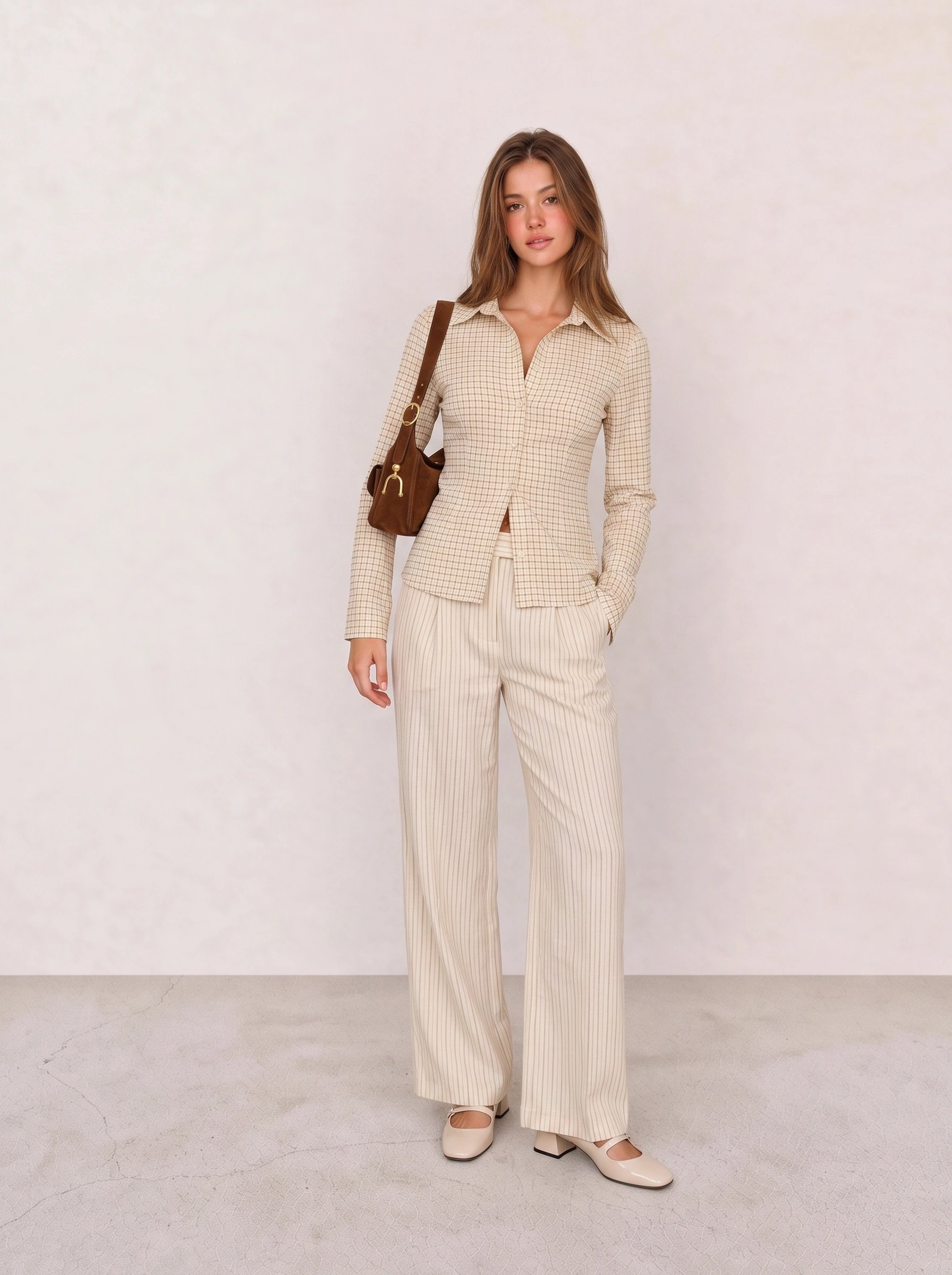
Why we picked it: this look proves loafers don't have to mean black or brown. The Beige Patent Mary Jane Flats pick up the cream-on-cream palette instead of breaking it, so the whole outfit reads as one tonal statement rather than shirt-plus-pants-plus-shoes.
Pros: the patent finish adds shine without needing jewelry to do it; the mary jane strap keeps the shoe secured through a full workday; tonal dressing like this photographs unusually well in daylight.
Cons: beige patent shows scuffs more visibly than black or brown, so this isn't the pair for a commute in bad weather. Patent leather also needs its own care routine — regular leather conditioner will dull the shine.
Shop Now: Cream Checked Long-Sleeve Shirt & Cream Wide-Leg Linen Trousers
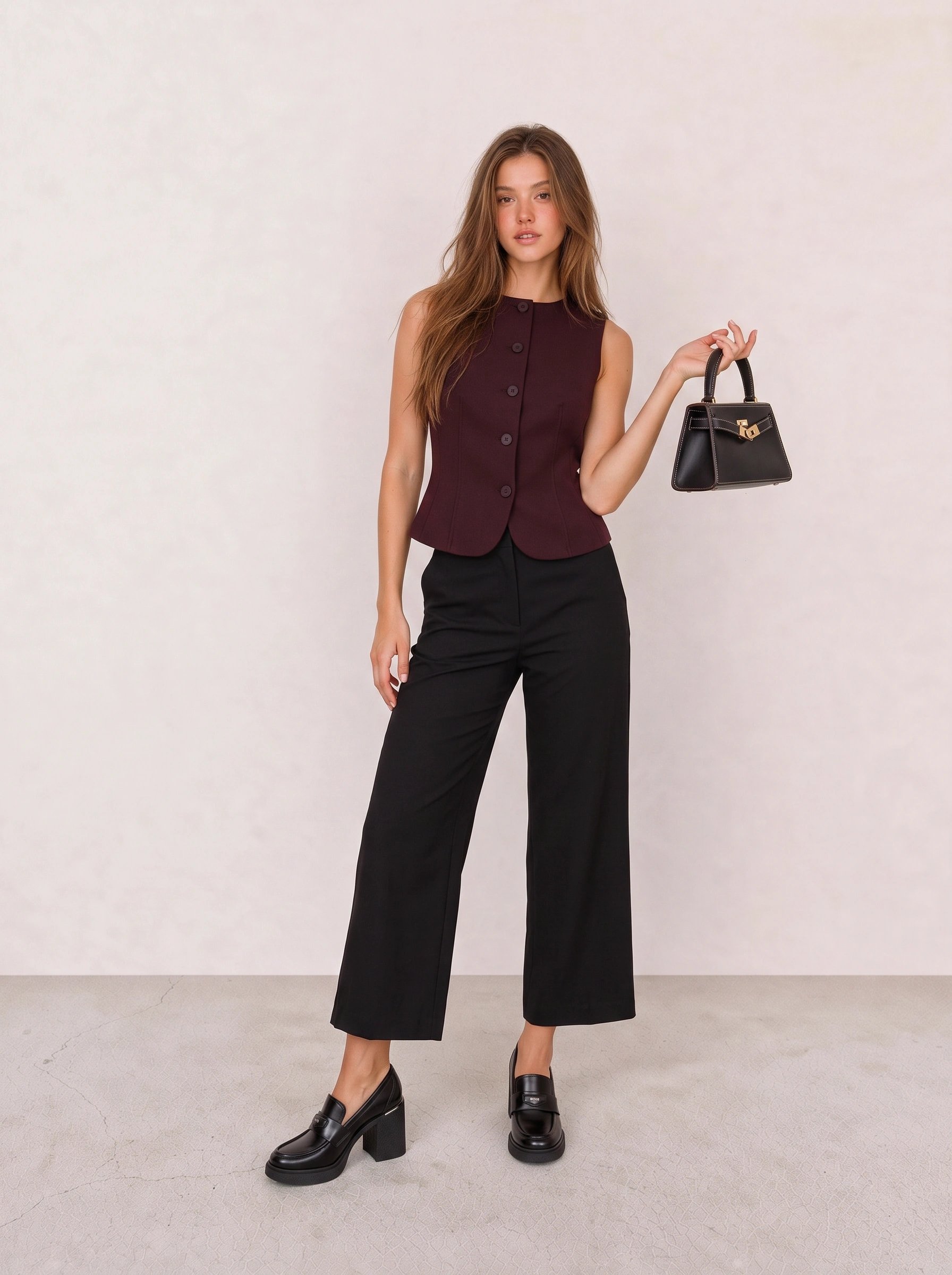
Styling tip: if you only buy one pair of loafers this year, make it black block-heel like the ones here. The added heel height means this shoe works for both a desk job and dinner after, without a shoe change in between.
Pros: the block heel gives a couple of extra inches without sacrificing the walkability that makes loafers useful in the first place; black goes with the cropped trouser hem here in a way brown wouldn't; the waistcoat-top-and-loafer combination reads more distinct than a plain blazer look.
Cons: a block heel is less packable for travel than a flat sole, and the cropped trouser length means these loafers need to be a genuinely good fit — nothing to hide behind if the shoe looks cheap up close.
Shop Now: Burgundy Button-Front Waistcoat Top & Black Cropped Wide-Leg Trousers
If I had to recommend a starting point for someone building an old money shoe wardrobe from zero, it's the block-heel loafer in black — it does the most across the widest range of outfits below.
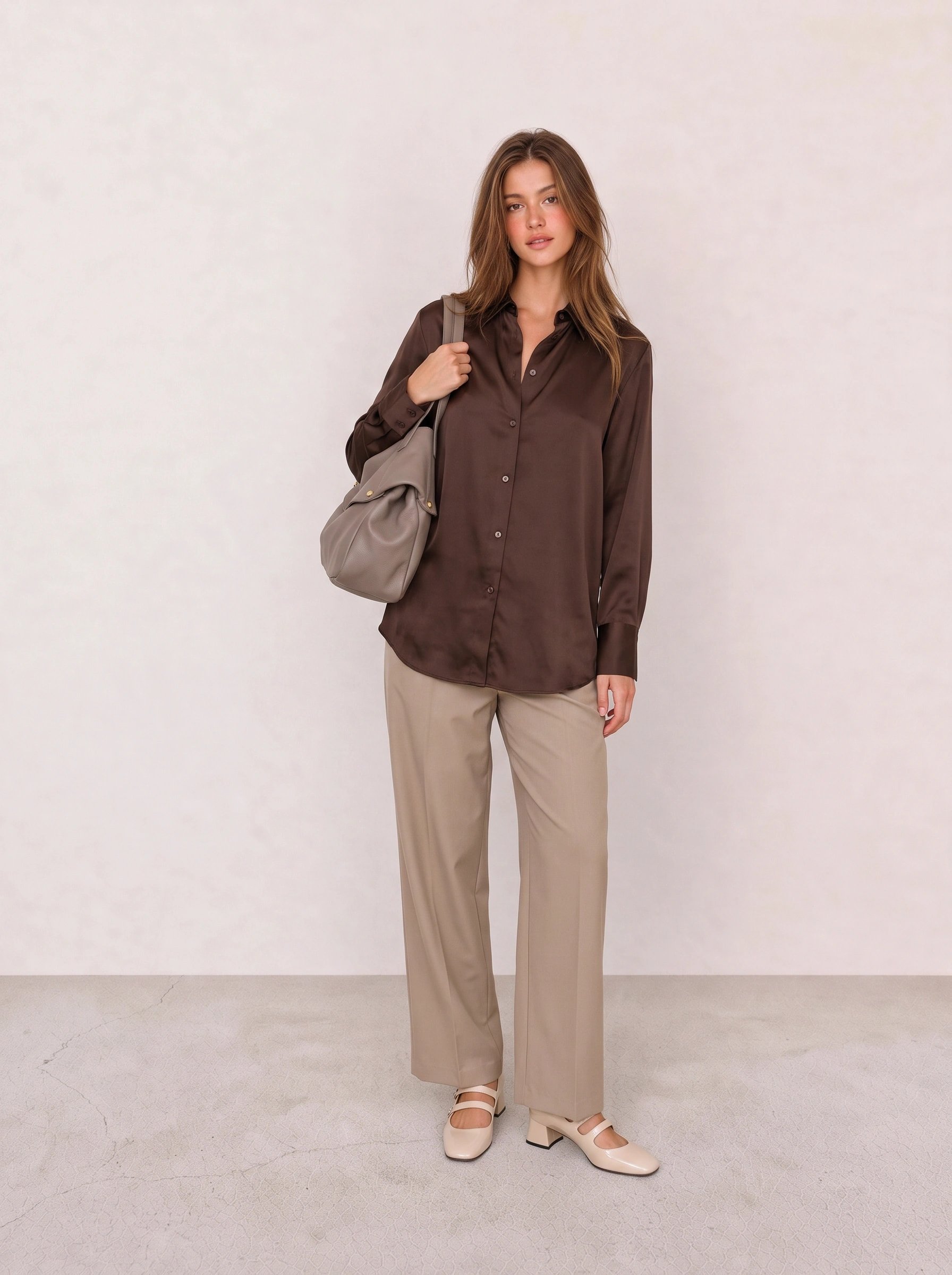
Why we picked it: this is proof that the same shoe can look completely different depending on what surrounds it. The beige mary jane flat here sits against brown satin and beige pleats rather than cream — a warmer, more autumnal version of the tonal formula from the first outfit.
Pros: the pleated trouser hides minor fit issues at the waist better than a flat-front cut; satin adds a low-key shine that pairs naturally with the patent shoe finish; the oversized hobo bag balances the smaller, more delicate shoe.
Cons: satin shirting wrinkles more easily than cotton and needs to be pressed before wear — skip this pairing if you're packing for travel and can't iron on arrival.
Shop Now: Brown Satin Button-Down Shirt & Beige Pleated Trousers
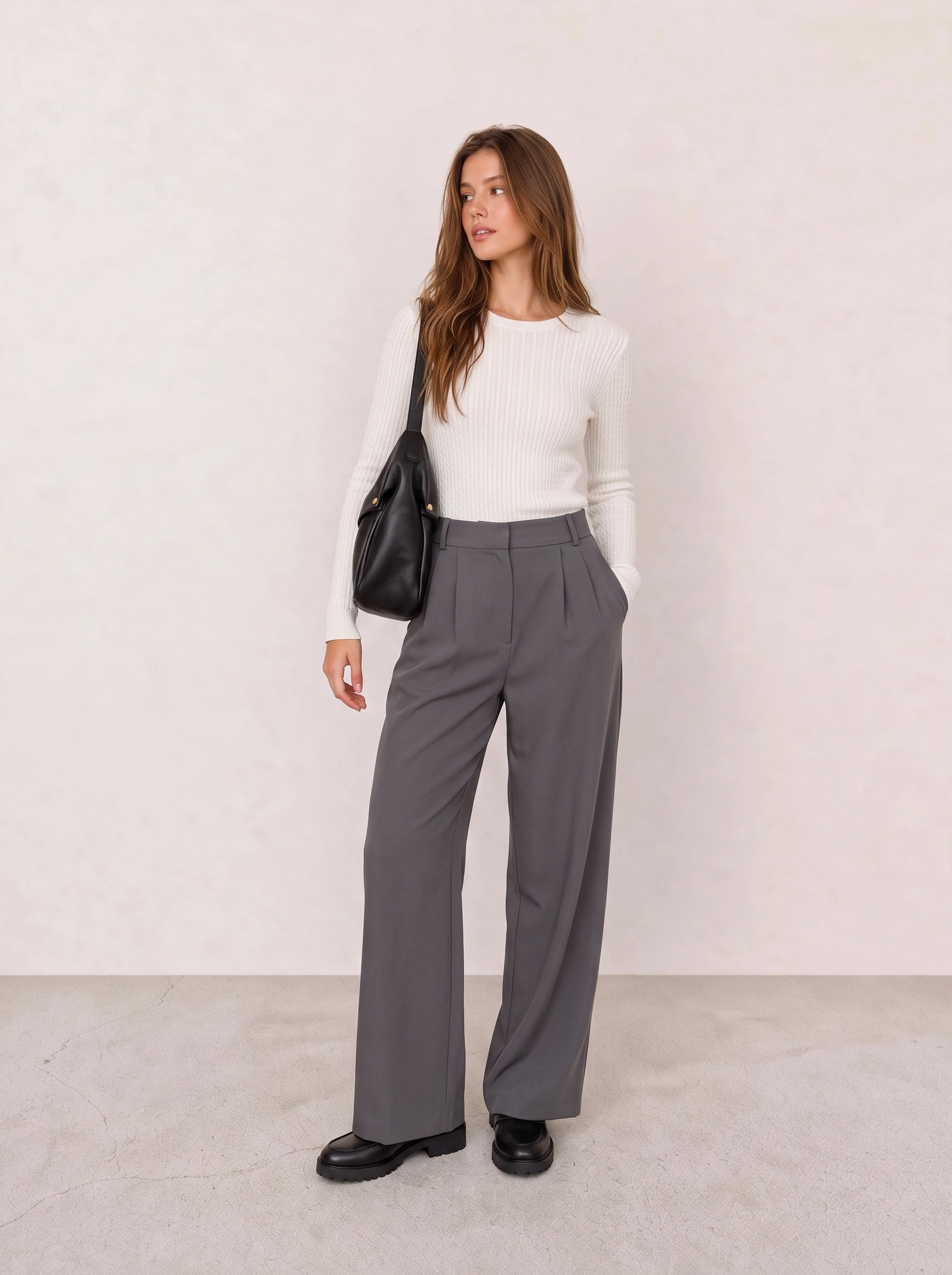
Why we picked it: chunky loafers are a common mistake in old money styling when paired with anything delicate, but here the charcoal wide-leg trouser has enough volume to match the shoe's proportions — nothing about the silhouette looks bottom-heavy.
Pros: the chunkier sole means better traction and comfort for actual daily wear, unlike a thin leather sole in wet weather; charcoal and black is a genuinely easy color pairing that doesn't require much thought; the ribbed knit adds texture without competing with the shoe.
Cons: a chunky sole reads more casual than a slim penny or horsebit loafer, so this isn't the pair for a formal dinner — it belongs in daytime, errand-and-lunch territory.
Shop Now: Ivory Ribbed Knit Sweater & Charcoal Wide-Leg Trousers
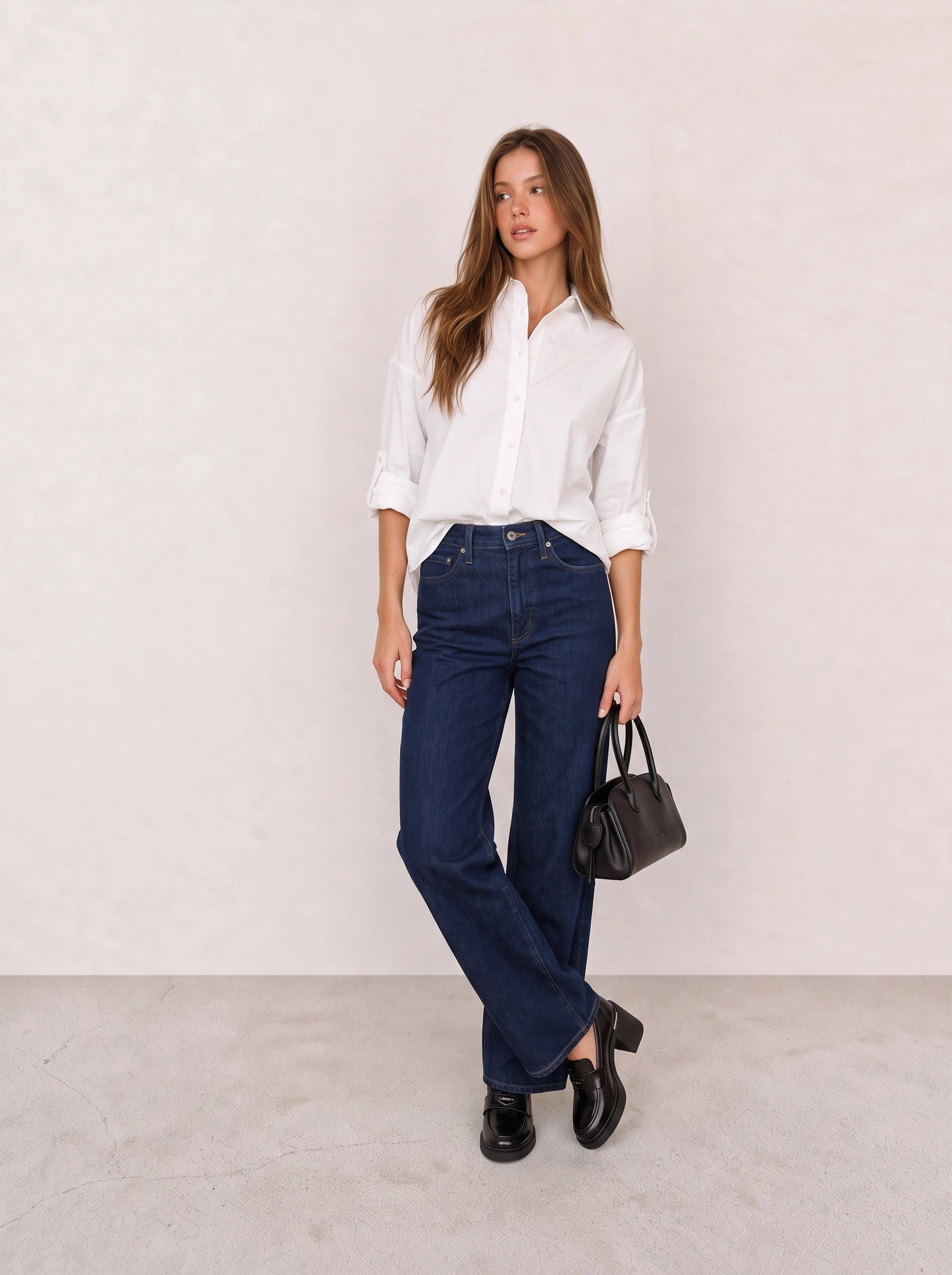
Where to wear it: this is the outfit for a Saturday spent between a coffee run and an afternoon that might turn into dinner reservations — the loafer does the work a sneaker can't, dressing up denim without dressing up the rest of the day.
Pros: black loafers with dark denim is one of the most versatile combinations in this guide — it moves from daytime to evening without changing shoes; the wide-leg cut breaks cleanly over the shoe instead of bunching at the ankle.
Cons: dark denim needs the right break at the hem to keep this proportion — too long and the loafer disappears entirely, which defeats the point of wearing one.
Shop Now: White Button-Down Shirt & Dark Blue Wide-Leg Jeans
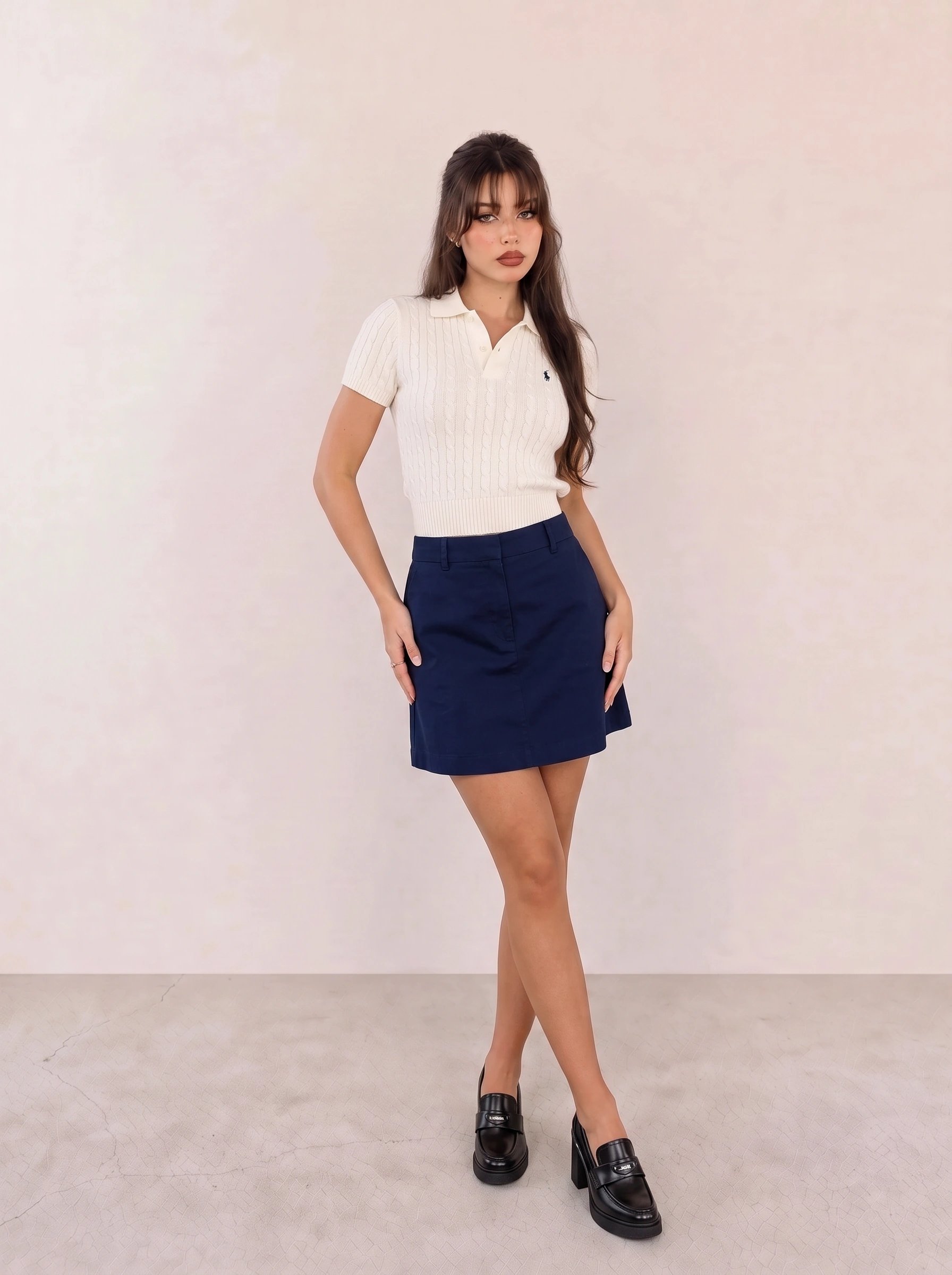
Why we picked it: this is the outfit that shows loafers work with a skirt just as easily as trousers — the block heel adds height to balance the shorter hemline, so the proportions stay intentional instead of accidental.
Pros: a pleated mini with a low block heel is more comfortable for standing and walking than a flat, thin-soled shoe would be; the cable-knit texture keeps the whole look from feeling too formal for a casual office.
Cons: with bare legs, this pairing runs cold outside of mild weather — a fine-gauge tight is worth adding once temperatures drop, and it doesn't change the silhouette.
Shop Now: Ivory Cable-Knit Polo Top & Gray Pleated Mini Skirt
None of these six pairs is the wrong choice — the mistake is buying all of them before you've worn any of them regularly. Start with one color, wear it until you know exactly how it fits your actual wardrobe, then build from there.