The Professional Wardrobe Checklist: 20 Essential Pieces
Build a professional wardrobe with 20 essential pieces, practical outfit formulas, styling rules, shopping priorities, and common mistakes to avoid.
Redaktionell geprüft: Vor der Veröffentlichung prüfen wir Tragbarkeit, Proportionen und Alltagstauglichkeit. Unsere redaktionelle Arbeitsweise und Bildrichtlinie erklären wir unter Über uns; Angaben zur Unabhängigkeit bei Affiliate-Links stehen im Affiliate-Hinweis.
A useful professional closet starts with twenty pieces that can survive a full calendar: a client meeting at nine, a desk day, dinner after work, and the commute between them. The point is not to make every outfit look identical. It is to own enough structure that getting dressed does not become a weekday negotiation.
This checklist covers the pieces that do the most work in an office wardrobe, how to choose them, and the outfit formulas that keep them from sitting unused. Start with the dress code you live in, then use the formal pieces as anchors rather than costumes.
What Is a Professional Wardrobe?
A professional wardrobe is a small set of clothes with enough polish for your workplace and enough range for the week. It relies on repeatable shapes: tailored trousers, shirts, knit layers, a blazer, a refined shoe, and a bag that can carry the day. The right number is not twenty for everyone. Twenty is a practical starting point because each category has a job.
The strongest closet has a clear visual language. Two or three neutrals, one or two accent colors, and fabrics that can share a rail make more combinations than a stack of novelty pieces. A black trouser and navy blazer can work together when their weights agree; a thin summer linen blazer beside heavy winter wool will fight before color enters the picture.
The History Behind the Modern Professional Closet
The professional closet still borrows from tailoring. The 1980s power suit made shoulder shape and matching separates a shorthand for authority, while the casual-office shift of the 1990s made the blazer useful beyond a full suit. Today, the useful part of that history is not the oversized shoulder pad. It is the idea that a few structural pieces can carry the softer layers around them.
Modern offices also ask more from clothes. You may walk, commute, work from a shared desk, join video calls, and meet a client in one day. That is why a polished flat and a washable knit can matter more than a second pair of heels. Professional dressing has moved toward flexible formulas, but it still needs a clean line and deliberate finish.
20 Essential Pieces for a Professional Wardrobe
Foundation pieces: 1) a dark tailored trouser, 2) a lighter trouser, 3) a knee-length or midi skirt, 4) a polished day dress, 5) dark straight-leg jeans if your office allows denim, and 6) a matching blazer-and-trouser suit. Trousers earn the biggest share of the budget because the rise, drape, and crease determine how the whole outfit reads.
Tops and layers: 7) a white shirt, 8) a light blue shirt, 9) a fine crewneck knit, 10) a fine V-neck knit, 11) a sleeveless shell, 12) a cardigan, 13) a structured blazer, and 14) a lighter jacket or overshirt. These pieces create the top-half contrast that keeps the same trousers from looking repeated. A shirt gives definition; a knit softens the line; a blazer restores authority.
Shoes and finishing pieces: 15) loafers, 16) a low block heel or slingback, 17) sleek ankle boots, 18) a structured tote, 19) a smaller work-to-dinner bag, and 20) a belt that matches your main shoe color. Most people overbuy tops and underbuy shoes. The shoe sets the final level of formality and decides whether an outfit remains comfortable at 4 p.m.
How to Style a Professional Wardrobe for Real Workdays
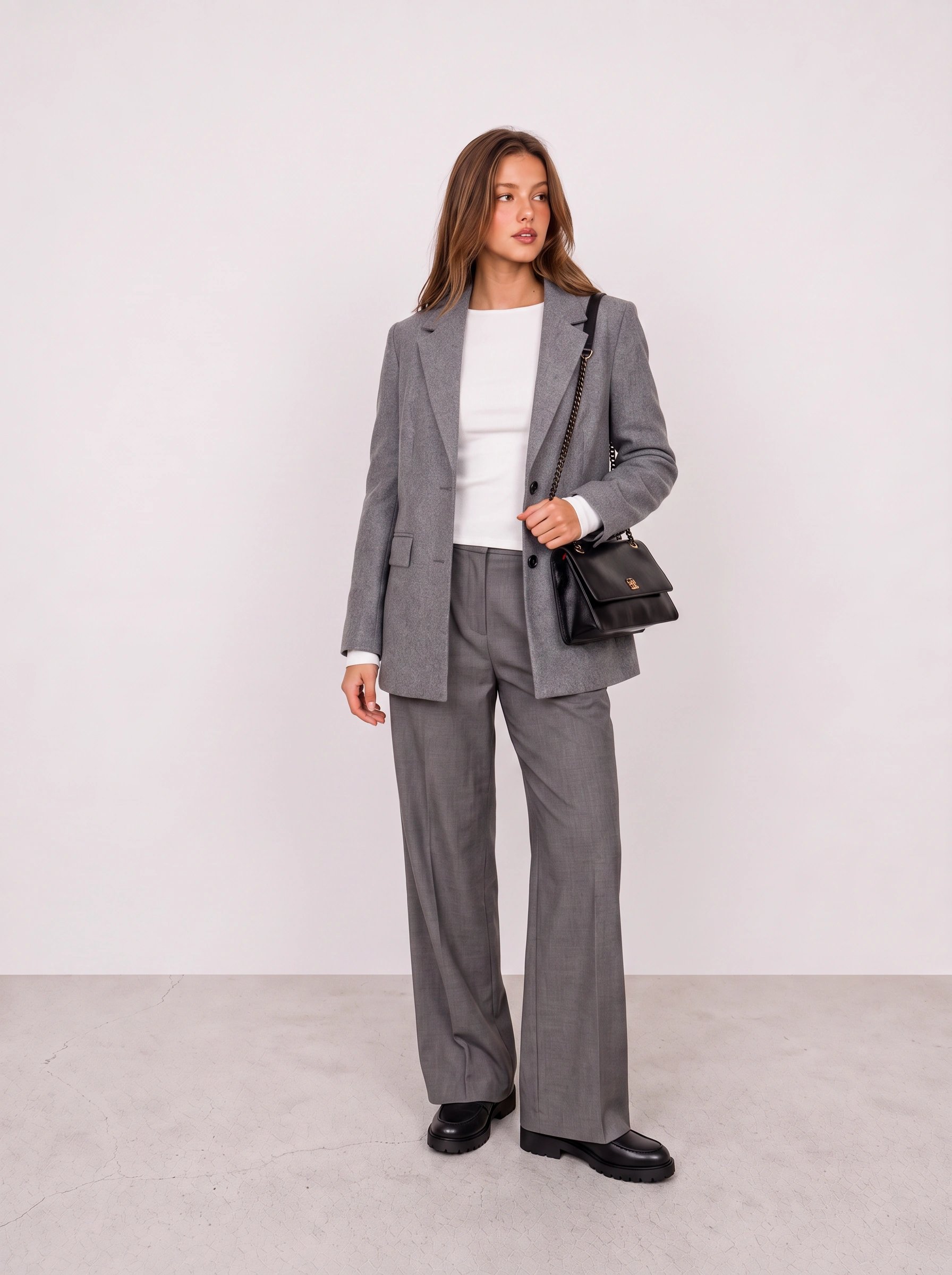
Grey Tailored Suit with White Tee Office Outfit makes the case for a relaxed suit. The grey tailoring supplies the vertical line, while the white tee leaves room at the neckline and keeps the formula usable for a long desk day. Without the blazer, the tee and trousers would need a sharper shoe or a tucked shirt to keep the same professional signal.
Build a Monday formula around a structured layer, a polished bottom, and a shoe you can walk in. For a client day, use the blazer and matching trouser. For internal meetings, split the suit and add a fine knit. The counterintuitive part: buying one excellent blazer often solves more outfit problems than buying several trendy tops, because it gives ordinary pieces a reliable frame.
For an office where the code is unclear, wear the version you can adjust downward. A blazer over a shirt and trouser can lose the blazer at your desk. A casual base cannot gain its missing structure once you arrive.
Professional Wardrobe Styling Rules That Save Time
Match the weight before you match the color. A substantial trouser works with poplin, fine knitwear, or dense suiting because each fabric has enough presence to hold its own. A slinky camisole with heavy wool can work under a blazer, but it needs that third piece to bridge the gap.
Give wide-leg trousers a defined top half. A tucked shirt, fitted knit, or cropped jacket creates a waist point and prevents the silhouette from becoming one uninterrupted column. If you prefer an oversized blazer, keep the shoe slimmer or show some ankle so the volume has an end point.
Repeat a color once. Black shoes and a black belt, brown loafers and a brown bag, or navy trousers with a navy stripe create a controlled line. Adding a third unrelated accent turns a work outfit into a collection of separate decisions.
Common Professional Wardrobe Mistakes to Avoid
Avoid buying a full closet for an imagined job. A lawyer in a formal office needs more suiting than a designer in a relaxed studio; a commuter needs shoes and a bag that can handle distance. Start with your actual week, then add the rare-event piece after the foundations earn their keep.
Do not confuse expensive with professional. Weak fit shows faster than a low price tag. A mid-range trouser altered at the waist will look more considered than a costly pair that puddles at the shoe or pulls across the hip.
The last trap is treating comfort as an afterthought. A beautiful heel that stays under your desk, or a tote that hurts your shoulder, does not support a work wardrobe. Choose comfort that preserves the line: cushioned loafers, low heels, smooth knits, and straps with enough width to carry what you bring.
Professional Outfit Examples Using the Checklist
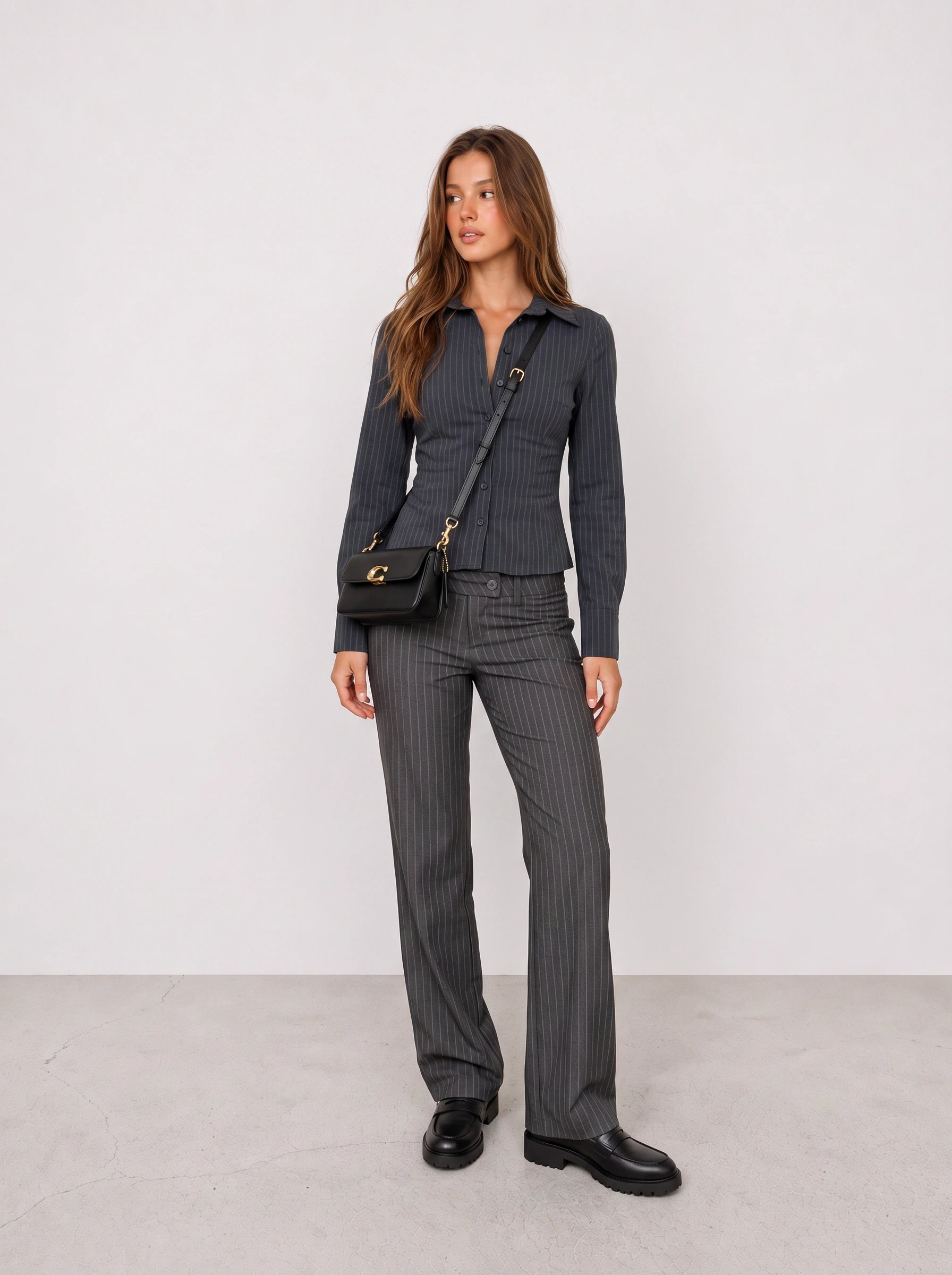
Charcoal Pinstripe Suit Office Outfit is the presentation-day version of the checklist. The matching pinstripe creates continuity from shoulder to hem, and the loafers keep the suit from becoming ceremonial. Without the matched jacket, the pinstripe trouser would shift toward business casual.
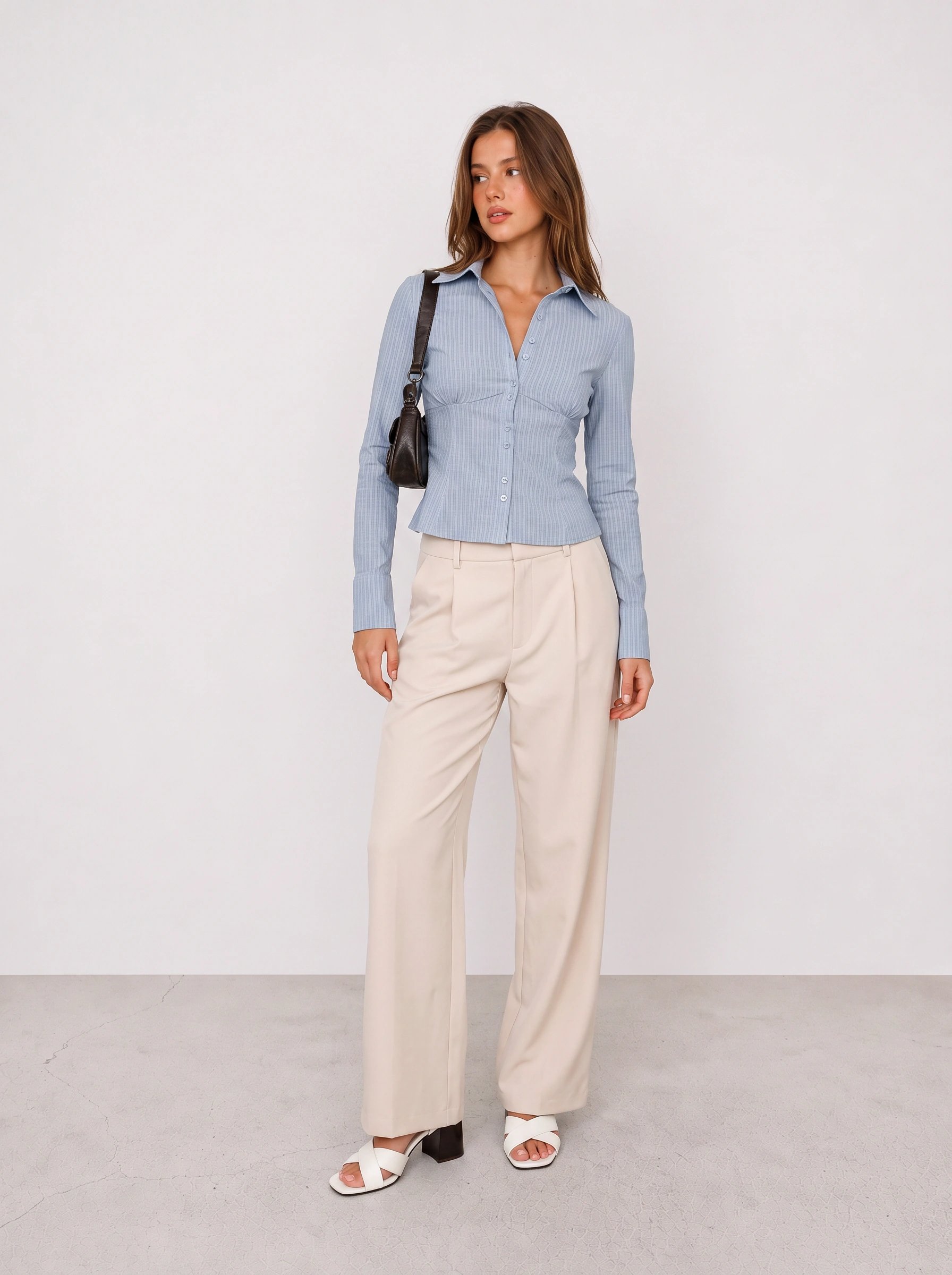
Blue Fitted Shirt and Cream Trousers Office Outfit uses color logic instead of a suit. The cool blue shirt sharpens the cream trousers, and the clean trouser crease gives the low heel a reason to be there. This works for the day when you move from a team meeting to lunch without needing a change of clothes.
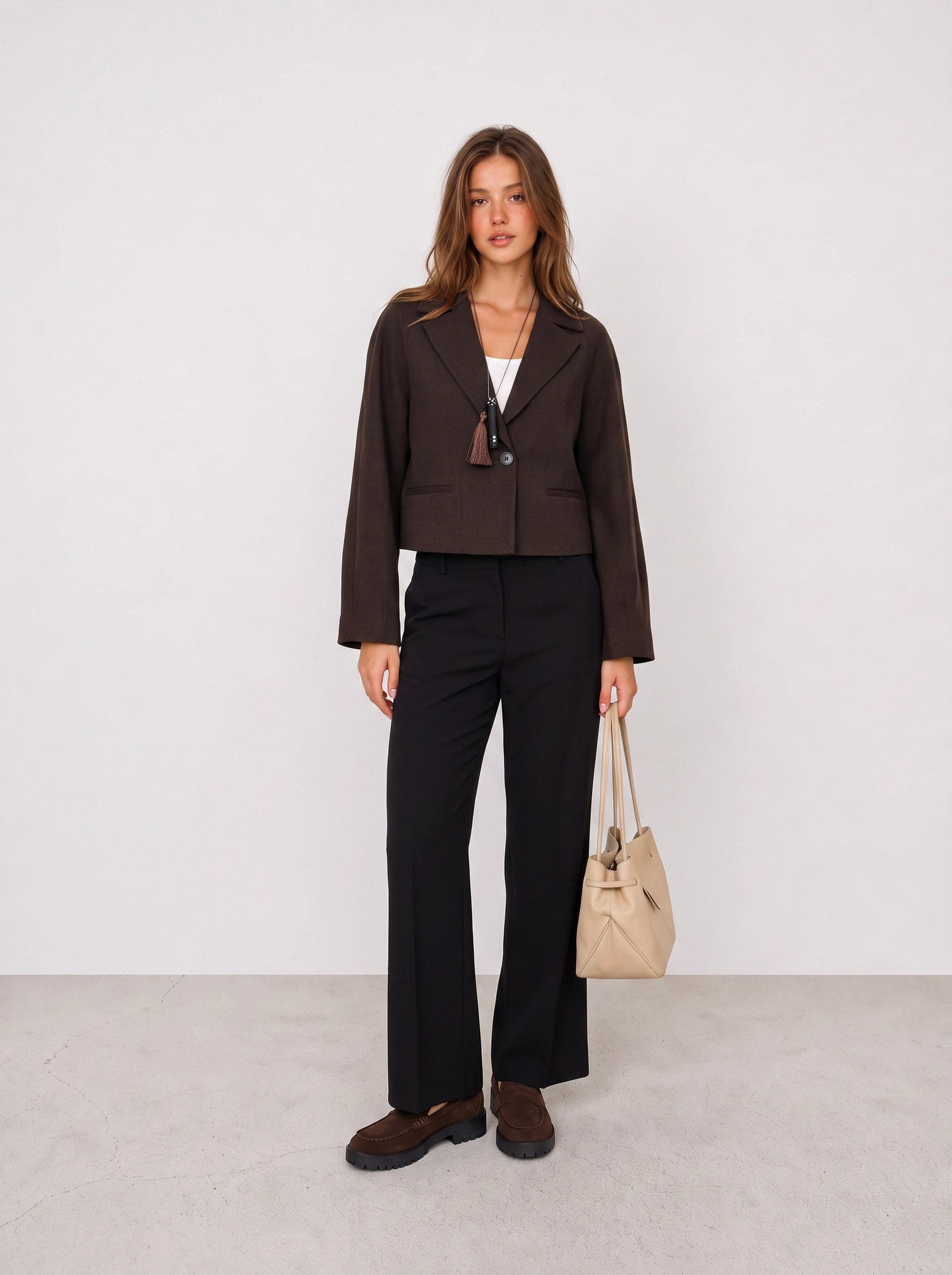
Brown Cropped Blazer and Black Trousers Office Outfit shows a useful proportion rule. The shorter blazer marks the waist above the wide trouser, while the dark loafers hold the volume at the floor. Without that cropped line, the trouser would need a more fitted top.
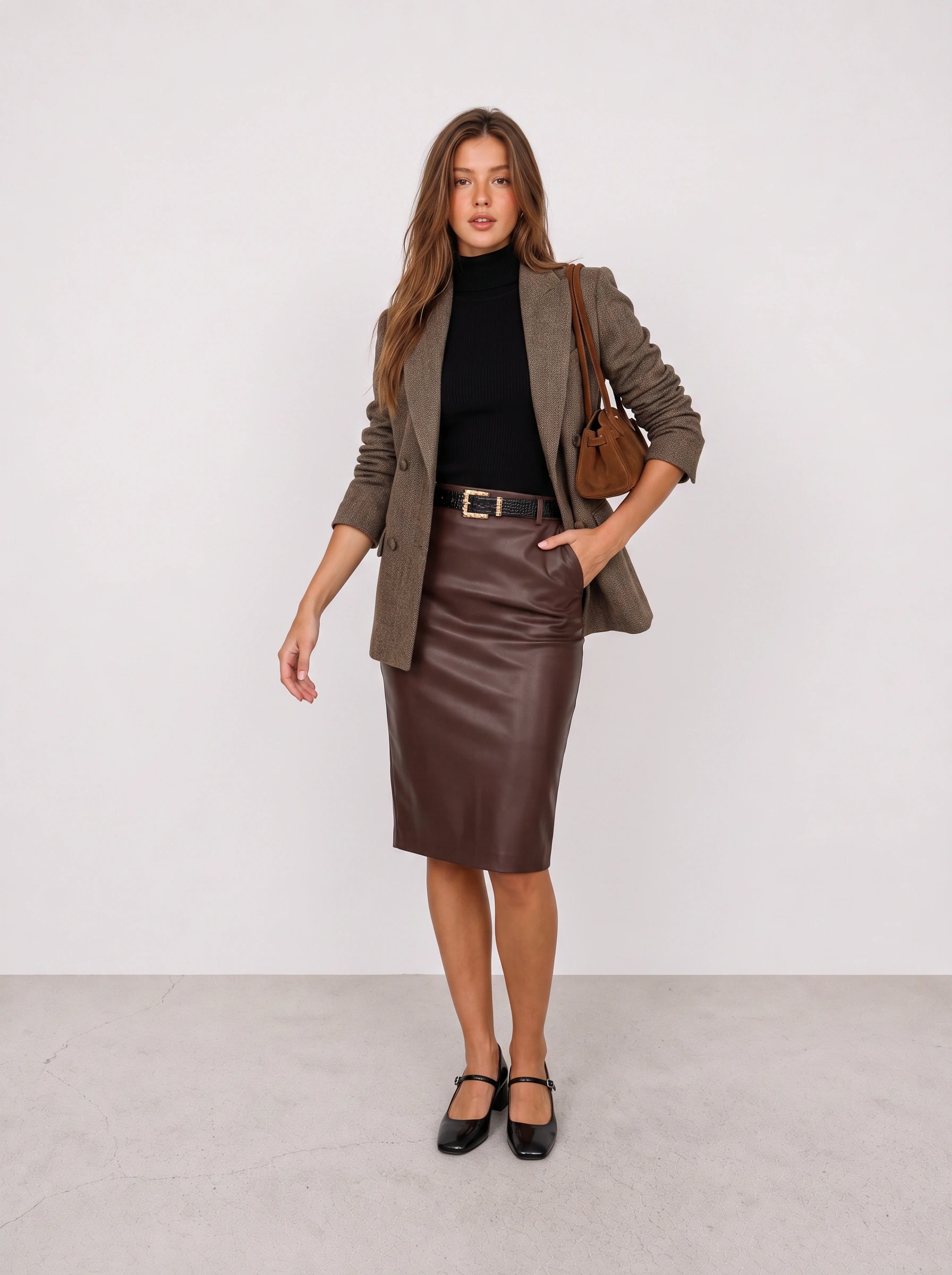
Brown Blazer and Leather Pencil Skirt Office Outfit brings more contrast for a client-facing day. The blazer repeats the warmth in the leather skirt, and the fitted column shape creates presence without relying on a bright color. Keep the top quiet; another dramatic texture would push the skirt into evening territory.
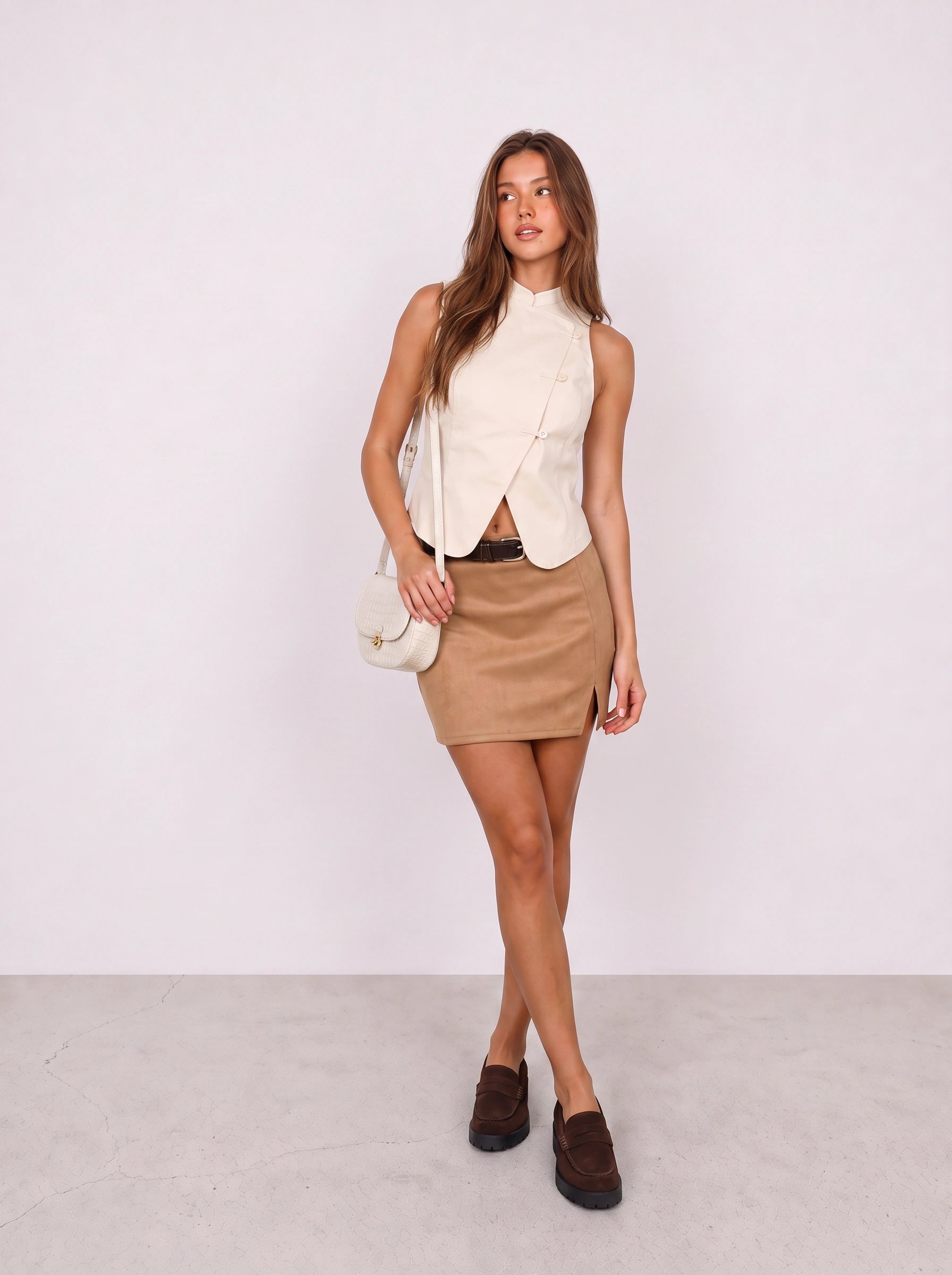
Cream Tailored Vest and Tan Mini Skirt Office Outfit belongs in a relaxed summer office with a clear casual policy. The tailored vest provides the structure that the shorter hem removes, while loafers keep the outfit in daytime territory. For a conservative workplace, keep the vest and change the skirt for a longer tailored option.
Where to Shop for Professional Wardrobe Pieces
At a budget level, look for trousers, shirts, and knitwear that fit well enough to alter. Spend less on trend colors and more on fabric composition, seam placement, and whether the garment can be washed or pressed at home. A reliable dark trouser has more value than a third novelty blouse.
At a mid-range level, prioritize a blazer, a structured tote, and the shoes you wear most. Look for shoulder seams that sit where your shoulder ends, trouser hems that work with your main shoe height, and leather or sturdy synthetic bags with a closure. These pieces show wear first.
At an investment level, buy only the pieces you already understand in your rotation: a suit, coat, leather bag, or shoe. Price does not fix a wrong silhouette. Try the piece with the clothes you already own before you decide it belongs in your closet.
Professional Wardrobe Checklist FAQ
What should be in a professional wardrobe? A professional wardrobe should include tailored trousers, shirts, knit layers, a blazer, polished shoes, and a structured bag. Choose versions that work across at least three outfits before adding a specialty piece.
How many pieces should be in a work wardrobe? Twenty pieces can cover a compact professional wardrobe when colors and fabric weights work together. Add more only when your climate, dress code, or schedule creates a real gap.
How do I build a professional wardrobe on a budget? Start with one dark trouser, one shirt, one knit, loafers, and a blazer or structured jacket. Alter fit where needed and buy the next piece only after you can name the outfits it will complete.
Can jeans be part of a professional wardrobe? Dark, clean, straight-leg jeans can work in a business-casual office that allows denim. Pair them with a tailored layer and polished shoe, then choose trousers for interviews and formal client meetings.
A professional closet should make your weekday easier, not narrower. Buy the pieces that solve your actual calendar, repeat them without apology, and let fit carry more of the message than novelty.